Ibn Khaldun
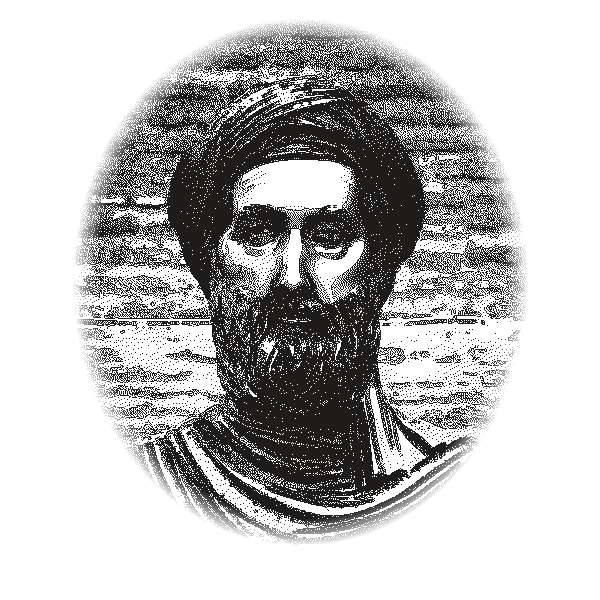
In the isolated fortress of Qal'at Ibn Salama, high on a wind-swept limestone ridge in the Algerian desert, an exhausted Andalusian-Arab diplomat and judge spent four solitary years in exile between 1375 and 1379. Abd al-Rahman Ibn Khaldun had seen the civilization of the fourteenth-century Mediterranean disintegrate before his eyes. He had served as grand vizier and royal emissary in the intrigue-poisoned courts of Fez, Granada, Tlemcen, and Tunis, surviving palace coups, prison cells, and political betrayals. He had watched the Black Death of 1348 sweep across North Africa and Europe, carrying off his parents, his mentors, and a third of the human race. In his own words: 'Civilization both in the East and the West was visited by a destructive plague which devastated nations and caused populations to vanish... It was as if the voice of existence in the world had called out for oblivion and restriction, and the world had responded to its call.'
Confronting this civilizational wasteland, Ibn Khaldun did not retreat into theological fatalism or superstitious astrology. He set out to invent an entirely new discipline: Ilm al-Umran—the science of human social organization. In the massive preface to his universal history, titled simply Al-Muqaddimah (The Introduction), he did for the social sciences what Galileo would later do for physics. He demonstrated that human societies, cities, economies, and empires are not governed by arbitrary divine whims or the virtues of heroic kings; they are governed by objective, discoverable social and economic laws as invariant and measurable as the laws of mechanics.
At the core of this sociological engine was an irreducible concept: Asabiyyah—group cohesion, social solidarity, the shared psychological bond that binds a tribe together into an indomitable collective force. Ibn Khaldun observed that asabiyyah is born not in the soft luxury of cities, but in the harsh, predatory crucible of the desert wilderness (badawa). Nomadic desert tribes, facing starvation, water scarcity, and perpetual warfare, develop an absolute, visceral mutual dependence. They have no palace guards, no city walls, no written laws; their sole protection is their shared honor, kin solidarity, and unhesitating willingness to die for one another.
When a tribe with supreme asabiyyah encounters a settled, urban civilization (hadara), the outcome is mathematically inevitable. Urban populations are soft, self-indulgent, and atomized; they delegate their physical defense to hired foreign mercenaries and tax-collecting bureaucrats. The nomadic tribe sweeps down from the desert like a desert storm, shatters the crumbling dynasty, captures the cities, and establishes a new royal house. But in that very moment of military triumph, the clock of dynastic decay begins to tick.
Ibn Khaldun mapped this inevitable imperial trajectory into an iron, five-stage cycle spanning approximately four generations, or one hundred and twenty years. In the first stage, the newly established rulers preserve their desert austerity and vigorous asabiyyah, sharing power and glory with their tribesmen. In the second stage, the ruler concentrates absolute autocratic power in his own person, stripping his tribal comrades of influence and surrounding himself with paid praetorian guards and palace flatterers. In the third stage, the dynasty attains peak architectural and cultural splendor: monuments, palaces, universities, and luxurious banquets proliferate; taxes are low, commerce booms, and civilization seems immortal.
Then comes the inexorable decline. In the fourth stage, the dynasty grows complacent and conservative, imitating the forms of past glory without internal vitality; the ruler lives in secluded luxury, disconnected from his subjects. In the fifth and final stage—senility and dissolution—the treasury empties under the weight of extravagant court consumption and massive military payrolls. To fund its deficits, the regime raises tax rates brutally upon merchants, farmers, and artisans. Here, Ibn Khaldun formulated the fundamental theorem of modern supply-side economics: at the beginning of a dynasty, tax rates are low and tax revenues are high; at the end of a dynasty, tax rates are high and tax revenues are low. High taxes kill business incentives, markets collapse, agriculture rots, the army mutinies, and the dynasty collapses under the assault of a new, hungry desert tribe carrying fresh asabiyyah.
In late 1400, in the final act of his extraordinary life, this sociological philosopher met the ultimate embodiment of raw, violent asabiyyah. The Turco-Mongol conqueror Timur (Tamerlane) had descended upon Syria, burning Aleppo to the ground and laying siege to Damascus. Ibn Khaldun, then serving as Grand Maliki Judge in Cairo, was lowered outside the walls of Damascus in a basket by ropes at night to negotiate with the warlord in his military tent.
For thirty-five days, the elderly scholar and the terrifying conqueror sat together on carpets. While other courtiers groveled in fear, Ibn Khaldun engaged Timur in clinical sociological analysis, questioning him about the tribal genealogies of the Mongols, explaining the cycles of empires, and writing a geographical treatise on the topography of North Africa at Timur's request. Ibn Khaldun saw Timur not as an apocalyptic monster, but as the supreme historical instrument of nomadic asabiyyah fulfilling the exact sociological laws written in the Muqaddimah.
Ibn Khaldun died in Cairo in March 1406 at the age of seventy-three, and was buried in the Sufi cemetery outside Bab al-Nasr. For centuries, his masterwork was neglected in the West, until nineteenth-century orientalists like Silvestre de Sacy and Austrian historians like Joseph von Hammer-Purgstall translated it, sparking shock across European academia.
Historians from Arnold Toynbee to contemporary sociologists have recognized that Ibn Khaldun conceived and formulated a philosophy of history that is undoubtedly the greatest work of its kind that has ever yet been created by any mind in any time or place. He founded sociology, political economy, and demography four centuries before Auguste Comte, Adam Smith, and Karl Marx. Ibn Khaldun taught humanity that empires do not fall from bad luck; they fall when their social glue dissolves, proving that the wealth of a nation resides not in its palaces or gold, but in the invisible, fragile architecture of human solidarity.
“Past and future resemble each other more than water resembles water.”
“Government is an institution which prevents injustice other than such as it commits itself.”
“Businesses owned by responsible and organized merchants eventually surpass those owned by wealthy rulers.”
“Throughout history many nations have suffered a physical defeat, but that has never marked the end of a nation. But when the nation becomes the victim of a psychological defeat, then that marks the end of a nation.”
“The secret of human society lies in asabiyyah—social solidarity.”
- Al-Muqaddimah (The Introduction / Prolegomena) 1377
- Kitab al-Ibar (Book of Lessons / Universal History) 1377-1382
- Al-Ta'rif bi-Ibn Khaldun (Autobiography) 1394-1401
- Shifa' al-Sa'il (Healing of the Inquirer) c. 1373