Thomas Keating
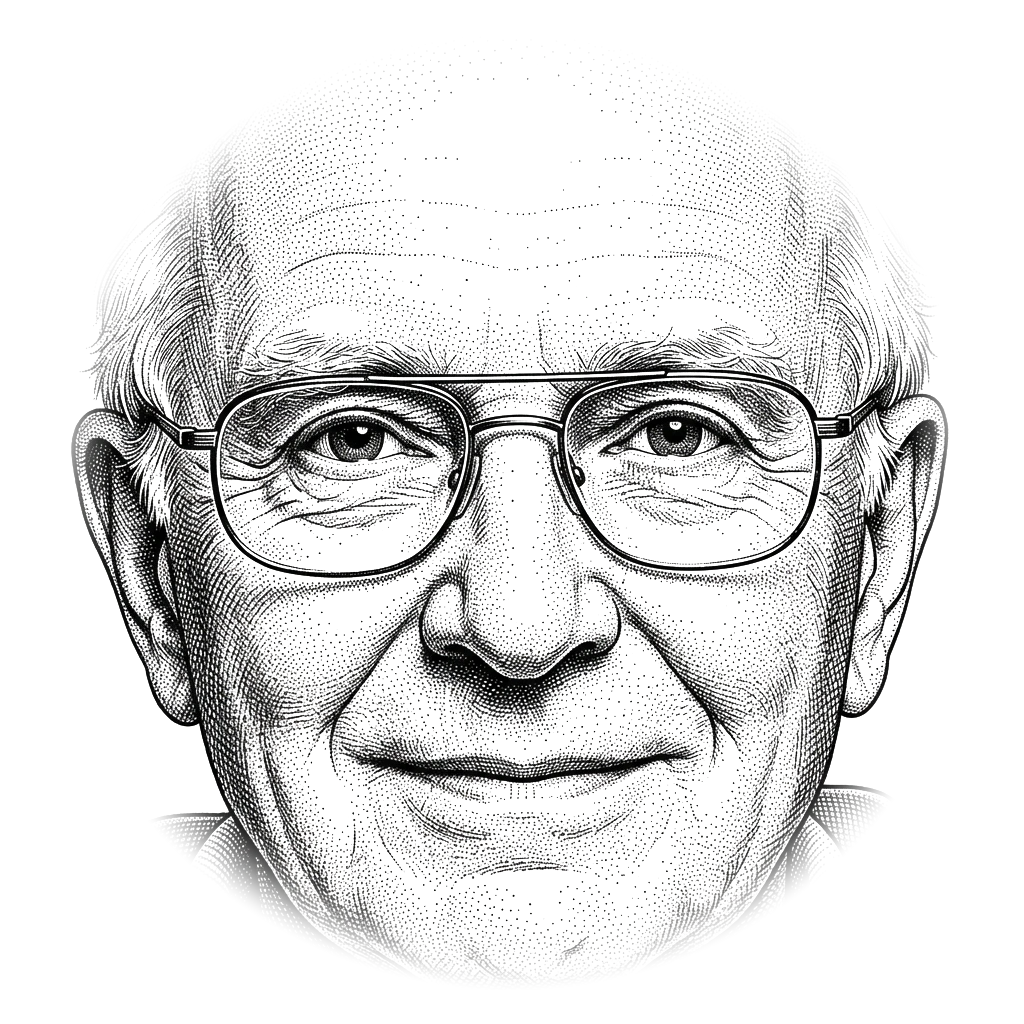
In the early 1970s, at St. Joseph’s Abbey in Spencer, Massachusetts, Abbot Thomas Keating observed a quiet cultural crisis. Across America, thousands of young seekers were traveling to ashrams, zendos, and Transcendental Meditation centers. Many drove directly past the high stone walls of Trappist abbeys to learn meditation from Eastern masters.
Keating, formed under the strict contemplative discipline of the Cistercian order, did not react defensively. Instead, he invited Eastern teachers, including the Zen master Joshu Sasaki Roshi, into the monastery for dialogue. When Keating asked why Westerners were turning East in such numbers, the answer was unambiguous: Western Christianity had lost or concealed its own contemplative technology. It offered moral exhortations, dogmatic catechisms, and verbal devotions, but no daily, operational method for entering the interior silence where transformative consciousness occurs.
Keating recognized the diagnosis as exact. For centuries, the Western church had relegated contemplation to an esoteric luxury reserved for cloistered mystics, or treated it with suspicion as quietism. In 1974, Keating and two fellow Spencer monks, William Meninger and Basil Pennington, set out to recover this forgotten heritage. In the abbey library, Meninger unearthed The Cloud of Unknowing, the anonymous fourteenth-century Middle English treatise, and began teaching its distilled principles to retreatants.
Yet Keating’s consequential act of seeing was not antiquarian retrieval. His breakthrough was the realization that the language of medieval apophatic mysticism—the "cloud of forgetting" and the "dark night of the soul"—described the exact developmental landscape being mapped by modern psychoanalysis. Long before trauma theory merged with somatic psychology, Keating saw that interior silence is neither a pious hobby nor an emotional tranquilizer. It is a rigorous developmental process: an involuntary psychic surgery he named "Divine Therapy."
To explain why human beings suffer, Keating constructed a clinical model of the human ego that drew equally from John of the Cross, Sigmund Freud, Carl Jung, and Erik Erikson. He termed it the False Self System.
An infant enters the world in complete vulnerability, driven by fundamental instinctual needs. Because every human environment is imperfect, those instinctual needs are inevitably frustrated. To survive the terror of helplessness, the infant’s psyche constructs compensatory coping mechanisms around three instinctual centers: 1. Security and Survival (hoarding, hyper-vigilance, defensive aggression); 2. Affection and Esteem (compulsive approval-seeking, vanity, terror of rejection); 3. Power and Control (domination, rebellion, manipulation, perfectionism).
As the child grows, these early survival strategies harden into what Keating called the "Three Emotional Programs for Happiness." By adulthood, they congeal into a rigid psychic apparatus: an illusory identity that mistakes its compensatory programs for the true self. The adult spends immense energy attempting to bend the external world into conformity with these infantile demands, reinforced by cultural conditioning, tribal loyalties, and institutional prestige.
Most religion, Keating observed with clinical bluntness, does not cure this pathology; it merely baptizes it. The False Self turns God into a celestial utility company, bargaining for security, social approval, and cosmic control. True spiritual transformation cannot begin until this entire compensatory infrastructure is systematically dismantled.
To effect this dismantling, Keating and his collaborators formulated Centering Prayer—a contemporary distillation of apophatic prayer stripped of monastic jargon and reduced to four operational guidelines.
Its mechanical foundation is a crucial distinction: Centering Prayer is an exercise in consent, not concentration.
In concentration techniques—such as mantra meditation, breath counting, or visualization—the practitioner anchors the mind to an object of attention. This trains focus, but it can subtly strengthen the ego's executive willpower, reinforcing the illusion of the autonomous controller.
Centering Prayer operates through radical surrender. The practitioner sits quietly and introduces a single monosyllabic "sacred word" (such as Peace, Love, or Abba). The sacred word is not a mantra chanted to induce an altered state, nor is it an object of mental fixation. Keating likened it to a down feather resting on a glass table: an effortless symbol of one’s intention to consent to the interior presence and action of God.
When thoughts arise—whether trivial distractions, brilliant insights, emotional reactions, or philosophical reflections—the practitioner makes no effort to suppress them. Fighting thoughts merely produces more thoughts. Instead, the moment the mind realizes it has become hooked by a passing thought, it simply lets go of the attachment and returns ever-so-gently to the sacred word. The discipline consists entirely of repeatedly releasing the ego’s compulsive grip on its own mental stream.
It is here that Keating’s insight into the unconscious reveals its full power.
When the conscious mind stops talking and rests in deep interior silence, the psychic pressure gauge drops. The ego’s vigilant defense mechanisms and muscular armor relax. As a mechanical consequence, the repressed emotional energy accumulated since infancy begins to surface into awareness.
Keating termed this ordeal the unloading of the unconscious.
Practitioners who enter Centering Prayer expecting serene spiritual feelings are often shocked to find themselves overwhelmed by sudden bouts of irrational anxiety, ancient grief, spontaneous weeping, volcanic anger, or visceral bodily tremors. In ancient monastic manuals, this was described as demonic assault or the "purification of the senses." In conventional therapy, it might be mistaken for acute psychic distress.
Keating identified it as the unmistakable sign of healing. Just as a physical wound expels infection before tissue can knit together, the human nervous system in silence expels the calcified emotional programs of childhood. The Divine Presence acts as an interior physician, lancing unconscious abscesses that intellectual analysis cannot reach.
The practitioner’s sole task during this purging is non-interference. If one attempts to analyze the surfacing memories, the ego immediately reasserts control. If one panics and abandons the silence, the material is re-repressed. By remaining in restful consent, returning gently to the sacred word, the practitioner allows the repressed energy to exhaust itself and dissolve into the silence.
Over months and years of practice, this daily evacuation of the unconscious breaks the tyranny of the emotional programs. The False Self collapses, revealing the True Self: a center of awareness rooted not in external validation, physical security, or social control, but in boundless, unitive participation in reality.
Thomas Keating did not invent the Christian contemplative tradition, but he rescued it from antiquarian obscurity. By demonstrating that the ancient apophatic journey and the modern healing of the unconscious are the same operational reality, he provided the modern world with an enduring architecture of liberation: a path where the surrender of the ego is not an act of self-destruction, but the threshold of human wholeness.
“Silence is God's first language; everything else is a poor translation.”
“Centering Prayer is not so much the absence of thoughts as it is the detachment from them.”
“The greatest obstacle to God is not our sins, but our own idea of who God is.”
“The spiritual journey is not a career or a success story. It is a series of humiliations of the false self.”
“Divine therapy is the process of healing the unconscious and bringing us into wholeness.”
- Open Mind, Open Heart: The Contemplative Dimension of the Gospel 1986
- Invitation to Love: The Way of Christian Contemplation 1992
- Intimacy with God: An Introduction to Centering Prayer 1994
- The Mystery of Christ: The Liturgy as Spiritual Experience 1987