David Hume
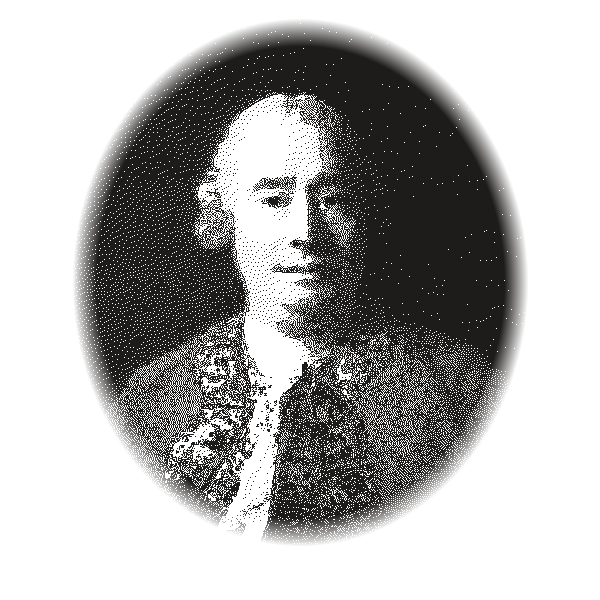
In the winter of 1737, in the quiet provincial retreat of La Flèche in Anjou—the very Jesuit college where René Descartes had studied a century earlier—a twenty-six-year-old Scotsman set out to demolish the grand metaphysical cathedrals of continental rationalism. David Hume did not arm himself with theological dogmas or intricate celestial geometry. His weapon was a scalpel of psychological dissection, honed on a deceptively simple observation: human beings never perceive the invisible glue they call necessary connection. When one billiard ball strikes another upon a green baize table, the eye witnesses the motion of the first ball, the instantaneous moment of contact, and the subsequent motion of the second. The eye does not see cause. It sees contiguity in time and space, followed by constant conjunction. The sensation of necessity is not a feature of the external universe; it is a psychological habit, an expectation inscribed upon the nervous system by repetitive exposure.
With this single, devastating stroke, Hume severed human knowledge from its ancient pretension to divine certainty. The Western philosophical tradition had long assumed that the universe was governed by a transparent rational order accessible to pure intellectual intuition. Descartes had claimed that clear and distinct ideas guaranteed the existence of God and an external mechanical cosmos; Spinoza had unfolded reality as a geometric progression of infinite substance. Hume stepped into this rarefied air and divided all propositions into two mutually exclusive territories: relations of ideas and matters of fact. Propositions concerning relations of ideas—geometry, algebra, arithmetic—are demonstratively certain, yet they reveal nothing about the actual world, telling us only how our definitions cohere. Propositions concerning matters of fact, by contrast, can never be demonstrated by pure reason, because the contrary of every matter of fact remains entirely conceivable.
That the sun will rise tomorrow is not an axiomatic mathematical necessity. Its negation implies no logical contradiction; a frozen sky or a shattered orbit is as grammatically coherent as the dawn. How, then, do we arrive at our unwavering conviction that the laws of nature will hold into the next instant? Hume showed that all our reasoning concerning matters of fact rests upon the foundation of cause and effect, and all our reasoning concerning cause and effect rests upon induction: the assumption that the future must resemble the past. Yet when we seek to justify this inductive assumption, we find ourselves trapped in a vicious circle. To argue that induction is reliable because it has worked in the past is to use induction to prove induction. The cornerstone of natural science was not an immutable decree of logical reason; it was an animal faith, a biological instinct, a custom carved into consciousness by the rhythm of sensory experience.
Turning this empirical scalpel inward, Hume examined the most cherished sanctuary of rationalist philosophy: the unified, immortal self. Descartes had proclaimed Cogito, ergo sum, positing an indivisible thinking substance that endures through every change of mood and perception. Hume sat in his study, closed his eyes, and looked into his own consciousness. He found no permanent soul, no stable core, no unmoving spectator behind the eyes. He stumbled only upon a torrential cascade of fleeting impressions: a sharp pang of heat, a fleeting memory of music, an ache of resentment, a flash of light. The self was not an indivisible pearl; it was a theater without a stage, a perpetual bundle of perceptions slipping past in continuous flux and succession. The identity we attribute to ourselves is a fiction of the imagination, smoothly bridging the discontinuities of memory.
In the realm of moral philosophy, this psychological realism provoked a profound shock. Moralists had long argued that virtue consists in the sovereign triumph of reason over passion, picturing human dignity as a charioteer steering wild horses with an iron hand. Hume inverted the hierarchy with cool deliberateness: reason is, and ought only to be, the slave of the passions, and can never pretend to any other office than to serve and obey them. Reason can calculate trajectory, estimate probabilities, and analyze consequences; it can tell an architect how to support a vault or an assassin how to mix arsenic. But reason alone can never furnish an impulse to act. It cannot prefer the scratching of a finger to the destruction of the whole world. Value does not reside in objects; it arises from the sentiment of approbation or disgust felt by a sympathetic human observer.
From this insight sprang Hume's famous guillotine: the impassable gulf between what is and what ought to be. Pick up any treatise on morals, he observed, and you will find the author proceeding for some time in the ordinary way of reasoning, establishing the existence of a God or describing human societies. Then, suddenly, without warning or justification, the copula is or is not is replaced by ought or ought not. This subtle shift introduces a completely new relation that cannot be deduced from factual descriptions of nature. You cannot derive a moral command from a physical inventory of the world. Morality is grounded in human sympathy, in our evolved capacity to resonate with the joys and agonies of our fellows, not in metaphysical blueprints inscribed in the stars.
The intellectual world recoiled from Hume's skepticism, perceiving it as an abyss of nihilism that rendered science groundless, religion ridiculous, and moral duty arbitrary. Immanuel Kant, reading Hume decades later in Königsberg, famously confessed that the Scottish philosopher had interrupted his dogmatic slumber, compelling him to construct the entire edifice of the Critique of Pure Reason merely to rescue scientific necessity from Humean habit. Religious apologists attacked his devastating essay On Miracles, wherein he demonstrated with clinical mathematical balance that it is always more probable that human testimony is mistaken or deceptive than that the established laws of nature have suffered a suspension.
Yet Hume was never a destructive solipsist. He was a radical naturalist. Skepticism, he insisted, is an intellectual medicine to be taken in the study to purge dogmatic arrogance, not a code of daily conduct. When philosophical paradoxes threatened to unhinge his mind, he did not surrender to despair; he dined with friends, played a game of backgammon, conversed with acquaintances, and returned to his books finding his doubts entirely dissolved by the warm resilience of human nature. Nature cured what philosophy had sickened. The radicalism of his project was not designed to paralyze human action, but to humble intellectual hubris, teaching humanity to abandon metaphysical fantasies and cultivate quiet, grounded wisdom within the limits of empirical observation.
Today, Hume's voice echoes with striking modern resonance across cognitive science, evolutionary psychology, and machine learning. Modern neural networks do not deduce the world through pure Cartesian axioms; they learn precisely as Hume described—by ingesting millions of historical impressions, extracting statistical regularities, and constructing probabilistic weights based on constant conjunction. The fundamental challenge of contemporary artificial intelligence—the alignment problem, out-of-distribution generalization, and the nature of inductive bias—is nothing other than Hume's problem of induction recast in silicon.
To read Hume is to experience the liberating clarity of an intellect that refuses to flatter itself with comfortable illusions. He stripped philosophy of its scholastic pretension, taught us to proportion our belief strictly to the evidence, and proved that human life is guided not by cosmic mathematical certainties, but by the humble, sturdy architecture of habit, sympathy, and experience.
“Custom, then, is the great guide of human life.”
“Reason is, and ought only to be the slave of the passions, and can never pretend to any other office than to serve and obey them.”
“A wise man, therefore, proportions his belief to the evidence.”
“Be a philosopher; but, amidst all your philosophy, be still a man.”
“If we take in our hand any volume; of divinity or school metaphysics... let us ask, Does it contain any abstract reasoning concerning quantity or number? No. Does it contain any experimental reasoning concerning matter of fact and existence? No. Commit it then to the flames: for it can contain nothing but sophistry and illusion.”
- A Treatise of Human Nature 1739
- Essays, Moral and Political 1741
- An Enquiry Concerning Human Understanding 1748
- An Enquiry Concerning the Principles of Morals 1751
- Political Discourses 1752
- Dialogues Concerning Natural Religion 1779