Filippo Brunelleschi
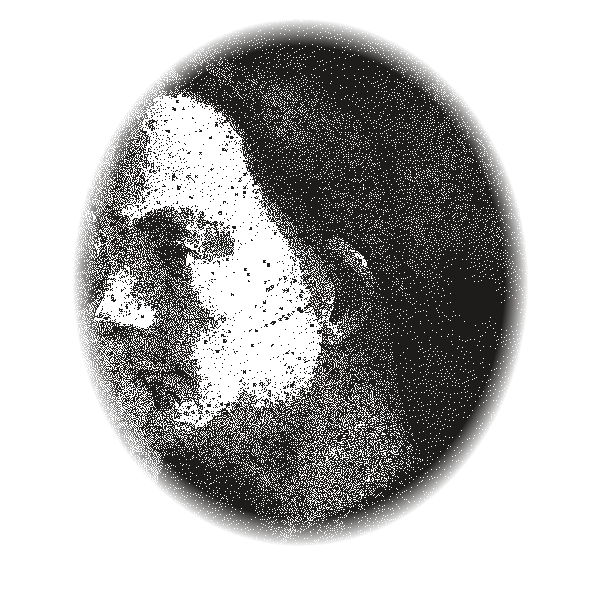
In the winter of 1401, a twenty-four-year-old Florentine goldsmith stood before the judges of the Arte di Calimala and watched his artistic pride crushed in public. The city had announced a competition to cast new bronze doors for the ancient Baptistery of San Giovanni, and Filippo Brunelleschi had submitted a panel depicting the Sacrifice of Isaac that was a masterpiece of raw, violent drama: Abraham’s knife poised at his son’s throat while an angel lunges forward to seize his wrist in midair. Yet the judges awarded the commission to his smooth, diplomatic rival, Lorenzo Ghiberti. Brunelleschi did not petition for a shared contract or offer excuses. He packed his tools, turned his back on the Florentine workshops, and walked out of the city gates accompanied by his young friend Donatello, heading south to the ruins of Rome. He swore an oath that he would never work in bronze again.
For more than a decade, the two friends lived among the brambles and sheep pastures of the Roman Forum, digging through centuries of rubble to uncover the buried foundations of the Caesars. While Donatello sketched marble statues, Brunelleschi measured the geometry of Roman ruins with cords, rulers, and plumb lines. He was obsessed by a single, terrifying question: how had the ancients built the soaring, unreinforced concrete dome of the Pantheon without internal buttresses or scaffolding? He scaled the crumbling travertine vaults, peeled away ancient mortar, and analyzed how brick courses had been laid to redirect physical thrust. When he finally returned to the banks of the Arno, he was no longer a decorative craftsman of silver chalices; he had become the first structural engineer of the modern world.
In Florence, a monumental crisis was waiting for him. For more than half a century, the Cathedral of Santa Maria del Fiore had stood as an open, mocking wound at the heart of the city. Its vast octagonal crossing spanned one hundred and forty-three feet—nearly the width of the Pantheon—and its walls rose one hundred and seventy feet above the stone pavement. Yet no one possessed the faintest idea how to cover it. The original architects had forbidden pointed Gothic exterior flying buttresses as crude German barbarism, demanding a clean, classical profile. Furthermore, the immense span and height rendered traditional Roman construction impossible: there were not enough tall, straight timber beams in all the forests of Tuscany to construct the colossal wooden centering—the temporary scaffolding (armadura) required to support thousands of tons of masonry until the keystone was keyed into place.
In 1418, the wealthy wool merchants of the Opera del Duomo announced a competition offering two hundred gold florins for a workable design. Brunelleschi stepped before the bewildered committee and made an announcement of astonishing impudence: he declared that he would raise the greatest dome in Christendom, spanning a void larger than any built since antiquity, completely senza armadura—without any wooden centering whatsoever.
The wardens laughed in his face, called him a lunatic and an empty braggart, and when he refused to disclose his secret methods out of fear that Ghiberti would steal them, they ordered the city guards to carry him bodily out of the palazzo and dump him onto the street.
To demonstrate the structural logic of his design without revealing its geometric equations, Brunelleschi famously challenged his rivals to stand a raw egg upright on a flat slab of marble. When the greatest architects of Italy tried and failed, Brunelleschi took the egg, gently tapped its rounded bottom against the stone to flatten the shell, and set it upright. When the wardens protested that anyone could have done that, Brunelleschi smiled coldly: anyone could do it after they had seen how it was done, and anyone could build his dome once they had stolen his methods.
Convinced that his madness concealed a demonic mechanical secret, the Opera appointed him chief architect in 1420—but to his intense fury, they forced him to share the salary and title with his old nemesis, Ghiberti. Brunelleschi bided his time. When construction reached the critical height where the outward thrust of the masonry began to buckle the walls, Brunelleschi feigned a violent illness, wrapped his head in blankets, and took to his bed for weeks. When the panicking builders asked Ghiberti how to proceed, Ghiberti was exposed as utterly incapable of directing the masonry. The wardens begged Brunelleschi to return, doubling his salary and granting him supreme, unchecked executive authority over the site.
What Brunelleschi orchestrated atop the walls of Florence was an engineering miracle that transformed construction into a mathematical symphony. Recognizing that a solid stone dome of that diameter would collapse under its own colossal dead weight, he designed a double-shell dome: a thick, robust inner dome that bore the structural load, and a lighter, weather-resistant outer dome that protected the interior from rain and gave the cathedral its soaring, majestic exterior silhouette. Between the two shells ran a network of staircases and twenty-four vertical marble and sandstone ribs that distributed the downward load onto the octagonal drum.
To prevent the octagonal walls from bursting outward under hoop stress—the fatal horizontal tension that tore ancient domes apart—Brunelleschi encircled the inner dome with horizontal rings of stone and chestnut timber joined by iron clamps, acting like the iron hoops that bind a wooden wine barrel.
Yet his supreme, breathtaking invention was the brickwork pattern: spina di pesce—the herringbone. Instead of laying bricks in flat, horizontal rings that would inevitably slide inward and plunge to the floor as the walls curved inward toward the center, Brunelleschi inserted diagonal vertical bricks at regular intervals throughout the horizontal courses. These vertical bricks locked into the masonry below, transferring the weight of the freshly laid mortar inward and laterally into the completed walls. Each ring formed a self-supporting horizontal compression arch the moment it was laid, locking itself into place under gravity before the lime mortar had even dried.
To feed the voracious masonry, Brunelleschi invented an entire armada of novel machines: the badalone, a colossal three-speed hoist powered by a single team of oxen that could raise thirty-ton stone blocks hundreds of feet in minutes without unharnessing the beasts to reverse direction, and swiveling counterweighted cranes that positioned stones with millimeter precision.
Yet the revolution of Brunelleschi’s mind extended far beyond stone and mortar. In 1415, standing inside the central portal of Santa Maria del Fiore, he conducted the historic optical experiment that founded linear perspective. Painting the Baptistery on a small wooden panel, he drilled a tiny peephole through the back of the board. Holding the panel backward to his eye, he held a mirror in front of it with his other hand, looking through the hole at the reflection of his painting. By removing the mirror, the viewer’s eye shifted seamlessly between the real Baptistery and the painted image. Brunelleschi had discovered that optical space is governed by geometric rays converging upon a single vanishing point on the horizon. With a mirror, a ruler, and a pinhole, he had invented the visual language of the Renaissance, providing the mathematical matrix through which Leonardo, Michelangelo, and Raphael would render three-dimensional reality onto flat canvas.
On the Feast of the Annunciation in March 1436, Pope Eugene IV consecrated the finished cathedral as the bronze bells of Giotto’s campanile rang across Tuscany. Brunelleschi had raised over thirty-seven thousand tons of stone and four million bricks into the sky without a single centering arch, creating an octagonal mountain that rose higher than the hills surrounding Florence. When he died in April 1446, the city buried him directly inside the crypt of the cathedral he had crowned—the only artist or engineer ever granted a tomb in the sacred floor of Santa Maria del Fiore. His epitaph remains carved in stone beneath the dome: Corpus magni ingenii viri Philippi Brunelleschi Florentini—Here lies the body of the man of great genius, Filippo Brunelleschi of Florence. He had proven that human reason, when grounded in the unbending geometry of mechanics, can conquer the void and build monuments that outlive time.
“Do not share your inventions with many, share them only with few who understand.”
“Nature provides the model for all great structures: observe how bone supports flesh.”
“Whoever possesses the patience to study the works of the ancients will find that they left nothing unattempted.”
“The mind must conceive the whole before the hand lays the first stone.”
“An egg cannot stand on its end until someone shows the way.”
- The Sacrifice of Isaac (Baptistery Competition Relief) 1401
- Invention of Linear One-Point Perspective (Baptistery Panel) 1415
- Ospedale degli Innocenti (Foundling Hospital) 1419
- Cupola of Santa Maria del Fiore (The Duomo of Florence) 1420–1436
- Sagrestia Vecchia (Old Sacristy, San Lorenzo) 1421–1428
- Basilica di Santo Spirito 1434–1446
- The Badalone Amphibious Cargo Patent 1421