John McCarthy
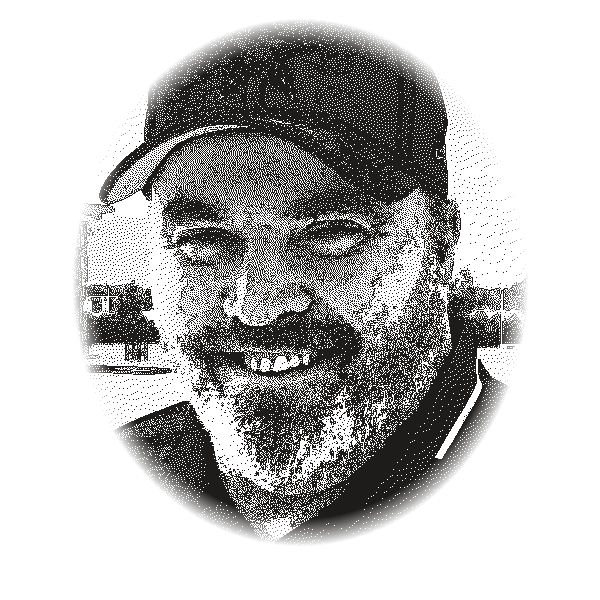
In the mid-1950s, the digital computer was held hostage by an arithmetic dogma. Conceived in the crucible of ballistics, table computation, and the numeric imperatives of the Manhattan Project, the machine was understood by its operators as an accelerated desk calculator. Its operational reality was dictated by the sequential von Neumann architecture: a monolithic, linear address space populated by fixed-width binary words, manipulated by an arithmetic logic unit executing contiguous sweeps of primitive instructions. Programming was an exercise in physical bookkeeping. One managed registers, mapped variables to fixed memory offsets, and organized data into static, contiguous arrays. If a computational routine encountered an entity that could not be indexed as a vector, a matrix, or a scalar coordinate, it had to be violently contorted into numeric form or abandoned altogether. Computing was viewed through an essentially hydraulic lens—data flowed through pre-allocated pipelines of physical memory, measured in discrete, static volumes.
This physical paradigm imposed three profound epistemic blindspots that paralyzed the study of mechanized thought. The first was the unexamined reduction of intelligence to numeric analysis and continuous feedback. Two dominant schools laid claim to the mechanics of mind: the numerical analysts, who believed reasoning would emerge from massive matrix inversions and the numerical approximation of differential equations; and the cyberneticists, who gathered around Norbert Wiener, W. Ross Ashby, and Warren McCulloch. The cyberneticists sought to capture cognition through continuous-state dynamical systems, analog feedback loops, and neuro-electric threshold logic. Yet both factions possessed no formal apparatus to represent arbitrary symbolic relations. They had no mechanism for manipulating nested syntactic structures, variable-depth taxonomies, formal logical deductions, or counterfactual assertions. The brain was treated either as a massive differential analyzer or as an analog homeostat, blind to the discrete, combinatorial nature of linguistic and propositional thought.
The second blindspot was the tyranny of contiguous physical storage. On contemporary architectures like the IBM 704, memory was a rigid physical grid. A sequence of instructions operated on data laid out side by side in ferrite core. If an algorithm required an informational structure that grew, branched, mutated, or dissolved in response to intermediate deduction, the programmer was forced into labyrinthine, manual memory management. One had to write bespoke subroutines to shift blocks of data across addresses, manually tracking pointer fragments and risking catastrophic stack corruptions. Because memory was conceived as a static physical territory rather than a dynamic semantic graph, machines could not represent thoughts whose formal shapes were not known prior to runtime.
The third blindspot was temporal and operational: the batch-processing queue. In the late 1950s, corporate and academic accounting treated computing cycles as an ultra-scarce capital asset, while treating the researcher's cognitive continuity as a free externality. Programs were encoded onto decks of punched cards, relinquished to white-coated machine operators, and processed monotonically through the central processing unit. The programmer received a diagnostic memory dump or a printout hours or days later. This operational architecture severed the investigative loop. It assumed a computation was a closed, deterministic trajectory running to an immutable conclusion, rather than an exploratory, inspectable semantic dialogue. An intellect attempting to construct a formal epistemic world on such a machine was like a composer attempting to orchestrate a symphony by mailing individual measures to an unseen orchestra and awaiting a recorded phonograph weeks later.
John McCarthy shattered this paradigm not by building faster calculating engines, but by recognizing that computation is not intrinsically about numbers, arithmetic trajectories, or contiguous storage. It is the formal manipulation of arbitrary symbolic expressions across dynamically allocated topological networks. Intelligence, McCarthy perceived, did not reside in the continuous voltage modulations of the cyberneticists, nor in the linear register arithmetic of the numerical programmers. It resided in discrete, declarative structures—in the capacity of an open system to represent concepts, facts, hypotheses, and inferential rules as symbolic graphs, and to perform rigorous computational transformations upon those graphs.
To liberate thought from the arithmetic substrate, McCarthy bypassed the mechanical intuition of the Turing machine’s tape and the physical registers of von Neumann. Instead, he reached back to the foundations of mathematical logic, specifically the lambda calculus of Alonzo Church, which treated functions not as machines with physical states, but as pure mathematical expressions capable of accepting other expressions as inputs and yielding transformed expressions as outputs. But Church’s calculus was abstract and static; it lacked an operational engine and a mechanism for branch-dependent execution. McCarthy supplied the missing bridge: the conditional expression as a first-class mathematical construct. By inventing an algebraic conditional that yielded values rather than executing jumps, and marrying it to the recursive definition of functions, McCarthy realized that an entire universe of computation could be constructed out of a vanishingly small set of symbolic primitives.
The breakthrough crystallized in the design of the symbolic expression, or S-expression, and the language Lisp. McCarthy discarded the requirement that data inhabit contiguous address spaces. He conceived of memory as a dynamic sea of minimal, paired-pointer cells, later designated as cons cells. Each cell possessed two internal pointers: one directed toward the payload or head of an expression (the address register, or car), and the other directed toward the continuation or tail (the decrement register, or cdr). Through this elementary bifurcation, contiguous physical storage was dethroned. A list was no longer a rigid sequence of adjacent registers; it was an elastic, non-contiguous chain of pointers wandering across the address space. By pointing a cell’s car toward another list rather than an atomic symbol, lists could nest within lists to arbitrary depth, giving birth to trees, directed acyclic graphs, and sprawling semantic webs.
From this simple topological insight came the most startling conceptual leap in the history of computer science: the discovery of homoiconicity and the universal meta-circular evaluator. In McCarthy’s design, code and data were structurally identical. A program was not a series of hardware opcodes isolated in an execution segment; it was itself an S-expression, built from the exact same cons cells, car-cdr chains, and atomic symbols as the data it processed. Because the language shared its physical and syntactic form with its internal objects, a Lisp program could treat another Lisp program as an inspectable, mutable graph. It could dissect it, optimize it, generate it, and evaluate it at runtime. McCarthy demonstrated that a minimal core of five symbolic primitives—to test equality, to detect an atom, to construct a pair, and to extract its two components—combined with conditional expressions and dynamic recursion, was sufficient to write an interpreter for the entire language within itself. Contained within half a page of pure mathematical code, the universal function eval achieved what Alan Turing had derived through cumbersome paper machines: a universal engine of computation, but rendered now as an elegant, practical, and transparent algebraic artifact.
The mechanical architecture McCarthy erected was an interlocking triad of formal logic, ephemeral memory dynamics, and human-machine interaction. At the root was the S-expression, inductively defined over a set of atomic symbols. An atom was an irreducible token; an expression was either an atom or an ordered pair of expressions. By defining lists as deeply nested dotted pairs terminating in a canonical empty symbol, McCarthy created a medium where computational syntax vanished into raw topological geometry. The programmer no longer instructed the machine to transfer contents between registers; one declared recursive transformations over symbolic trees. To compute the derivative of a mathematical equation, one did not write approximations using floating-point increments; one passed the algebraic expression itself into a recursive function that matched symbolic patterns, extracted sub-clauses via pointer traversals, and reconstructed the differentiated analytic expression as a freshly minted symbolic tree.
Because these symbolic trees branched, mutated, and spawned ephemeral sub-expressions continuously during execution, the physical lifecycle of a pointer could no longer be managed by the programmer. If every intermediate deductive step required manual memory tracking, the cognitive burden would collapse the entire symbolic edifice. To resolve this, McCarthy invented the automatic garbage collector. In doing so, he fundamentally decoupled the conceptual lifetime of an idea from the physical lifetime of the transistor or magnetic core storing it. Under McCarthy’s original mark-and-sweep architecture, the computing system maintained a global pool of unallocated cells—the free list. When an algorithm required memory, it plucked a cons cell from this reservoir. When the reservoir was exhausted, the processor paused its foreground trajectory, traversed the entire operational graph of the program from its active roots, marked every cell reachable by pointer traversal, and then swept the entire physical address space, reclaiming every unreached, orphaned cell back into the free list. Memory was no longer a fixed plot of land that the programmer had to farm and clear manually; it became an automated, self-renewing ecosystem.
Simultaneously, McCarthy realized that a symbolic epistemology demanded an entirely different temporal posture between the human mind and the machine. If computing was the exploration of dynamic semantic spaces, the researcher could not remain stranded behind the temporal barrier of the batch queue. In an internal memorandum at the Massachusetts Institute of Technology in January 1959, McCarthy outlined the mechanical architecture of time-sharing. He argued that the economic equation that privileged central processor utilization over human cognitive latency was an illusion. The true scarce resource was the intellectual momentum of the human modeler.
McCarthy designed a regime wherein the machine multiplexed its execution across dozens of interactive terminals concurrently. By interweaving hardware interrupts, dynamic memory protection registers, and rapid paging, the central processor could service an individual user’s keystroke, execute a symbolic transformation, update the interpreter’s internal state, and return the result within milliseconds, before pivoting to the next user. In one stroke, McCarthy transformed computing from an industrial batch-processing plant into an interactive cognitive utility. The programmer was brought into direct, conversational communion with an active, running runtime: the read-eval-print loop was born. A thought could be hypothesized, injected into the live symbolic environment, evaluated, and reshaped in real time.
Yet symbolic representation remained impotent without a formal mathematical account of dynamic knowledge. In his foundational work with Patrick J. Hayes, McCarthy introduced the Situation Calculus, an axiomatic framework designed to formalize common-sense reasoning within first-order mathematical logic. A situation was defined as a complete, static snapshot of the universe at a specific instant; fluents were functions or predicates whose values varied across situations; and actions were modeled as kinematic transition functions mapping an existing situation into a novel one. Causality became a matter of formal logical deduction: asserting axioms that explicitly declared how an action altered the truth values of fluents.
It was precisely within this formalization that McCarthy uncovered the deepest epistemic obstacle of mechanized common sense: the Frame Problem. Standard deductive logic was structurally incapable of handling dynamic environments because it possessed no mechanism to declare what remained unchanged across an action. If an agent painted a wooden block green, classical first-order logic could deduce that the block was now green, but it could not infer that the block’s mass, its spatial coordinate, and the ambient temperature remained identical, unless the programmer provided an infinite, combinatorially explosive catalog of negative axioms explicitly stating that painting an object does not change its location, its weight, or the political state of the world.
To break this inferential paralysis, McCarthy invented Circumscription, pioneering the formal mathematics of non-monotonic logic. Classical deductive logic is monotonic: if a conclusion is derived from a set of premises, the addition of new premises can never invalidate that conclusion. Human common-sense reasoning, however, is fundamentally non-monotonic and defeasible; we reason with implicit default assumptions, assuming the world behaves normally unless an explicit contradiction is introduced. McCarthy translated this intuition into rigorous second-order logic. Circumscription syntactically minimizes the extension of designated predicates—such as a predicate denoting abnormality—asserting that the only entities that possess a given property are those compelled to do so by the explicit axioms of the model. By mathematically enforcing that exceptions are minimal, McCarthy gave machines the formal capacity to jump to common-sense conclusions, to reason under incomplete information, and to retract deductions when novel observations contradicted default assumptions.
McCarthy’s intellectual trajectory was an unrelenting war against the prevailing orthodoxies of the early computer age. The first and most decisive collision occurred in the mid-1950s, when he broke decisively from the reigning cybernetics establishment. Norbert Wiener, whose prestige towered over post-war academic science, viewed the machine through the lens of continuous engineering: servomechanisms, radar tracking, and closed-loop feedback systems governed by differential equations. Cybernetics sought to explain the brain by looking at the electrical behavior of the wetware—the continuous, analog firing of neurons and statistical feedback. McCarthy saw that this was an epistemic dead end for higher cognition. An analog feedback loop could keep a torpedo on course, but it could not prove a geometric theorem, parse a recursive natural sentence, or execute a game of chess.
To formally decouple his enterprise from Wiener’s school, McCarthy executed an intentional semantic and political maneuver. In 1955, while drafting the proposal for the legendary Dartmouth Summer Research Project alongside Marvin Minsky, Nathaniel Rochester, and Claude Shannon, McCarthy deliberately coined the phrase Artificial Intelligence. It was an explicit declaration of independence. By christening the field "artificial intelligence," McCarthy sought to purge the study of mind of continuous analog dynamics, statistical homeostats, and biological mimicry. He intended to establish a sovereign discipline grounded in mathematical logic, symbolic processing, discrete combinatorics, and declarative epistemology. The Dartmouth conference marked the great historical schism: cybernetics receded into systems engineering and control theory, while symbolic artificial intelligence rose to define the frontier of computational science.
A second bitter friction developed with the industrial titan of the era, IBM. Throughout the late 1950s, IBM dominated corporate and institutional computing through its powerhouse vacuum-tube and transistorized systems, the IBM 704 and 7090. IBM’s business model and engineering ethos were optimized around maximizing the raw throughput of batch processing. Machines were industrial capital investments designed to crunch accounts, payrolls, and scientific calculations without interruption. When McCarthy proposed the time-sharing architecture—demanding that IBM engineer dynamic hardware interrupts, dynamic memory-relocation hardware, and paged protection keys so that human operators could converse directly with the processor—he was met with institutional incomprehension and resistance. IBM engineers viewed time-sharing as an unforgivable squandering of expensive machine cycles. They argued that halting a multi-million-dollar arithmetic core to wait for an operator’s lumbering fingers was an economic absurdity.
McCarthy refused to yield. Bypassing the conservative hierarchies of IBM, he allied himself with the early hackers of MIT and small, agile hardware manufacturers like the fledgling Digital Equipment Corporation. He proved his architecture not through corporate committees, but through direct physical demonstration. His foundational 1959 memorandum ignited the construction of the Compatible Time-Sharing System under Fernando Corbató and led directly to MIT’s celebrated Project MAC. Within half a decade, the interactive model had dismantled the batch paradigm. IBM was eventually forced to spend hundreds of millions of dollars retrofitting time-sharing architectures and virtual memory into its System/360 line, adopting the very gospel McCarthy had preached to deaf ears years before.
The third institutional clash occurred on the international stage during the design of ALGOL 60. McCarthy served as a United States delegate to the international committee tasked with standardizing a universal algorithmic language. The committee was heavily dominated by European and American numerical analysts whose intellectual universe was circumscribed by matrices, floating-point vectors, and procedural execution. McCarthy fought intensely for two radical inclusions: the first-class conditional expression, and true functional recursion supported by dynamic runtime stack-frame allocation rather than static activation records.
The numerical faction balked. Static allocation was predictable, efficient, and easily mapped onto physical registers; recursion was viewed as an academic curiosity that introduced dangerous non-determinism into execution times and risked stack overflow. McCarthy prevailed on both fronts, forcing conditional expressions and recursion into the canonical ALGOL 60 report, permanently altering the evolution of procedural languages. Yet the committee adamantly rejected his broader vision: dynamic heap memory, heterogenous list processing, pointers, and automated garbage collection. To the numerical purists, an automated runtime reclaiming dynamic memory was an uncontrollable, unmathematical monstrosity. Realizing that the committee was hopelessly wedded to the arithmetic paradigm, McCarthy walked away from the standardizing body. He poured his energies entirely into Lisp, choosing to build an independent, uncompromised intellectual world rather than compromise with the procedural orthodoxy.
Today, the architecture John McCarthy envisioned has ceased to be visible as an architecture precisely because it has become the atmosphere of modern computing itself. The contemporary programmer lives within an intellectual landscape McCarthy carved out of raw logical theory. When a software engineer writes in a modern high-level language—whether Python, JavaScript, Rust, or Swift—they inhabit a medium whose fundamental affordances were once considered McCarthy’s heresies.
Every time a runtime environment automatically manages the allocation and destruction of objects without human intervention, sweeping the dead detritus of computation from the physical heap, it executes a descendant of McCarthy’s original mark-and-sweep algorithm. Every time a program passes a function as an argument, evaluates an anonymous lambda closure, dynamically branches through an expression-oriented conditional, or nests arbitrary collections within collections without calculating physical byte boundaries, it honors the mathematical syntax of the 1960 paper on recursive symbolic expressions. The interactive console, the notebook interface, the immediate feedback loop of the command-line shell, and the elastic infrastructure of cloud computing—which dynamically slices a physical processor among thousands of concurrent virtual environments across the globe—are the physical realizations of the time-sharing memorandum McCarthy pinned to John Russell’s desk in the winter of 1959.
Beyond the plumbing of software engineering, McCarthy’s deepest legacy remains epistemic. He permanently redefined the boundary between the mechanical and the intellectual. Prior to McCarthy, the computer was an instrument of calculation: it counted, measured, and solved trajectories. After McCarthy, the computer became an epistemological engine: an instrument for holding a mirror up to human thought, capable of manipulating the symbols of meaning, representing beliefs about the world, and tracing the consequences of logical inference. Even as the contemporary tide of artificial intelligence has surged toward massive statistical networks, continuous tensor calculations, and probabilistic parameter spaces—in many ways reviving the continuous, sub-symbolic intuitions of the cybernetics school he fought to displace—the central challenge McCarthy articulated remains unresolved: the necessity of common sense, the formal representation of causality, the ability to explain inference, and the non-monotonic retraction of default beliefs in the face of contradictory truth.
John McCarthy saw through the physical illusion of the hardware. He understood that copper, silicon, ferrite cores, and clock frequencies were merely the contingent, accidental vessels of computation. The true engine was the symbolic expression: an infinite, recursive hierarchy of abstract forms through which mind could be mathematically stated and systematically evaluated. He freed the intellect of the programmer from the geometry of the physical machine, giving humanity a universal language to map the architecture of thought itself.
“It is reasonable to hope that the relationship between computation and mathematical logic will be as fruitful in the next century as that between analysis and physics in the last.”
“If you want the computer to have general intelligence, the outer structure of program has to be logical deduction from declarative facts.”
“He who refuses to do arithmetic is doomed to talk nonsense.”
“As soon as it works, no one calls it AI anymore.”
- A Proposal for the Dartmouth Summer Research Project on Artificial Intelligence 1955
- A Proposal for a Computer Operating System that Permits Time-Sharing 1959
- Recursive Functions of Symbolic Expressions (LISP Foundation) 1960
- A Basis for a Mathematical Science of Computation 1963
- Some Philosophical Problems from the Standpoint of Artificial Intelligence 1969
- Circumscription—A Form of Non-Monotonic Reasoning 1980