Leonhard Euler
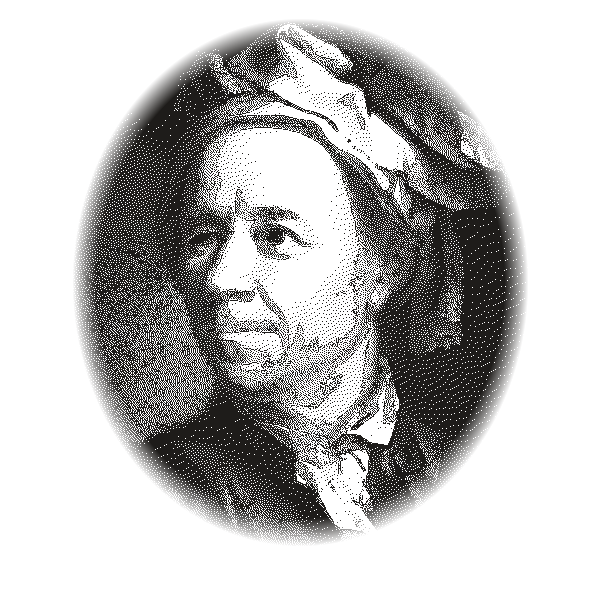
In the annals of human thought, there has never been a computational mind that operated with the torrential, effortless velocity of Leonhard Euler. The French physicist and astronomer François Arago observed of him: "He calculated without apparent effort, as men breathe, or as eagles sustain themselves in the wind." Where other mathematicians strained against the limits of ink, paper, and cognitive endurance, Euler moved through infinite series, differential equations, and celestial mechanics like a natural force. He could calm a crying infant on his knee while drafting an original memoir on the calculus of variations, or perform mental computations of the orbital perturbations of the Moon across fifty terms while chatting with his family around the dinner table. He was the undisputed master architect of mathematical notation, the geometer who transformed analysis from a chaotic collection of geometric tricks into the universal, symbolic alphabet of modern science.
Born in Basel in 1707, the son of a modest Calvinist pastor, Euler was recognized in early boyhood by Johann Bernoulli, the greatest living master of the newly invented Leibnizian calculus. Bernoulli immediately convinced Euler’s father to abandon plans for the boy’s ecclesiastical career, declaring that the young prodigy was destined to be a giant of analysis. In 1727, at the age of twenty, Euler journeyed east to the newly founded Imperial Academy of Sciences in Saint Petersburg, joining Daniel and Nicolas Bernoulli in the glittering capital built by Peter the Great on the Baltic marshes. There began the most prolific scholarly career in the history of human intellect, yielding more than eight hundred books and memoirs that filled seventy-four thick quarto volumes of the Opera Omnia.
In 1736, Euler turned his attention to a curious civic riddle that had puzzled the citizens of Königsberg in Prussia. The city was bisected by the river Pregel, which surrounded the island of Kneiphof and divided the mainland into four distinct landmasses connected by seven picturesque bridges. On pleasant Sunday afternoons, the burghers of Königsberg would debate whether it was possible to plan a walking route through the city that crossed every one of the seven bridges precisely once and returned to the starting point.
To an ordinary mathematician, the problem appeared trivial or intractable, requiring the tedious enumeration of thousands of possible itineraries. Euler saw deeper. In his paper Solutio problematis ad geometriam situs pertinentis, he recognized that the physical length of the bridges, the width of the river, and the geographic contours of the streets were completely irrelevant to the problem. What mattered was not geometry in the classical Euclidean sense of distances and angles, but the abstract structure of connection—what Leibniz had dreamed of as geometria situs, the geometry of position.
Euler stripped away the water and the stone, replacing the four landmasses with four abstract points—vertices—and the seven bridges with connecting lines—edges. In doing so, he invented graph theory and laid the cornerstone of modern topology. He demonstrated with pristine simplicity that every time an itinerant traveler enters a landmass via a bridge and leaves it via another, two bridges are consumed. Therefore, for an unbroken path to exist that traverses every bridge exactly once, every vertex (except possibly the starting and ending points) must possess an even number of connected bridges. Checking Königsberg’s graph, Euler observed that three landmasses had three bridges and one had five. All four vertices had odd degrees. The walk was not merely difficult; it was mathematically impossible. Through four vertices and seven lines, Euler had proven that abstract topology governs physical reality.
Yet Euler’s most ubiquitous monument is the symbolic architecture within which all modern mathematicians live and think. Before Euler, mathematics was a babel of conflicting notations and cumbersome verbal descriptions. Euler swept away the clutter and standardized the symbolic toolkit of the world: he introduced $f(x)$ to denote a function of an independent variable; $e$ for the base of natural logarithms ($2.71828...$); $i$ for the imaginary unit $\sqrt{-1}$; $\Sigma$ for mathematical summation; and the Greek letter $\pi$ to denote the invariant ratio of a circle’s circumference to its diameter.
In 1734, at the age of twenty-seven, he stunned Europe by solving the famous Basel Problem, which had defeated the greatest analysts for nearly a century: calculating the exact sum of the infinite series of the reciprocal squares of the natural numbers—one plus one-fourth plus one-ninth plus one-sixteenth, onward to infinity. While others struggled with numerical approximations that crept slowly past one point six, Euler daringly factored the infinite Taylor expansion of the sine function as if it were a simple polynomial with an infinite number of roots. With breathtaking algebraic audacity, he proved that the infinite sum converged exactly to pi squared over six. It was an astonishing, revelatory result: a series of discrete integers, summed to infinity, unexpectedly yielded the fundamental constant of the circle.
From this mastery of infinite series emerged what Richard Feynman famously called "the most remarkable formula in mathematics": Euler’s Identity. By linking the exponential function to the trigonometric functions through complex numbers ($e^{ix} = \cos x + i \sin x$), Euler set $x$ equal to $\pi$, yielding: $$e^{i\pi} + 1 = 0$$ In this single, lapidary equation, the five most fundamental constants of human mathematics—zero (the additive identity), one (the multiplicative identity), $e$ (the engine of continuous growth), $i$ (the vertical axis of complex numbers), and $\pi$ (the cycle of geometry)—are bound together with the three fundamental operations of addition, multiplication, and exponentiation in an immutable, cosmic symmetry.
Equally revolutionary was his discovery of the polyhedral invariant in 1750. Euler showed that for any convex polyhedron, regardless of how irregular or distorted its faces might be, the number of vertices ($V$) minus the number of edges ($E$) plus the number of faces ($F$) always equals two: $$V - E + F = 2$$ A cube, a tetrahedron, an icosahedron, or a faceted soccer ball all share the exact same Euler characteristic: $\chi = 2$. It was the first topological invariant in history, demonstrating that beneath the changing metric forms of geometry lies an indestructible topological skeleton.
The final chapter of Euler’s life was an exhibition of superhuman intellectual courage. In 1735, exhausted by days of non-stop calculation to produce astronomical maps for the Saint Petersburg Academy, he suffered a violent fever that destroyed the sight in his right eye. In 1766, a cataract formed in his remaining eye, plunging him into total darkness for the final seventeen years of his life.
A lesser mortal would have surrendered to despair. Euler barely paused. "In this way," he remarked with tranquil humor, "I shall have fewer distractions." With the aid of his phenomenal memory—he could recite the entire text of Virgil’s Aeneid in Latin from memory, noting the first and last line of every page in the edition he had read as a boy—he continued his work uninterrupted. He dictated memoirs, treatises, and complete multi-volume textbooks from the darkness of his study to his sons and amanuenses. His output during his blindness actually increased: between 1766 and his death in 1783, he produced more than four hundred memoirs, solving the three-body problem of lunar motion, founding the calculus of variations, and deriving the governing equations of inviscid fluid dynamics.
On the afternoon of September 18, 1783, in Saint Petersburg, Euler spent his morning calculating the ascension rate of newly invented Montgolfier hot-air balloons. Later, over a cup of tea, he discussed with his friend Lexell the newly discovered orbit of the planet Uranus. A few moments later, while playing with his grandson, he suffered a massive brain hemorrhage. His pipe slipped from his fingers, he whispered, "I am dying," and lost consciousness. As the Marquis de Condorcet wrote in his immortal eulogy before the French Academy: "He ceased to calculate and to live."
“Read Euler, read Euler, he is the master of us all.”
“Now I will have less distraction.”
“Mathematicians have tried in vain to this day to discover some order in the sequence of prime numbers, and we have reason to believe that it is a mystery into which the human mind will never penetrate.”
“For since the fabric of the universe is most perfect and the work of a most wise Creator, nothing at all takes place in the universe in which some rule of maximum or minimum does not appear.”
“Logic is the foundation of the certainty of all the knowledge we acquire.”
- Solutio problematis ad geometriam situs pertinentis (Königsberg Bridges) 1736
- Methodus inveniendi lineas curvas (Calculus of Variations) 1744
- Introductio in analysin infinitorum 1748
- Institutiones calculi differentialis 1755
- Principes généraux du mouvement des fluides (Euler Equations) 1757
- Institutiones calculi integralis 1768
- Lettres à une princesse d'Allemagne 1768