Linus Pauling
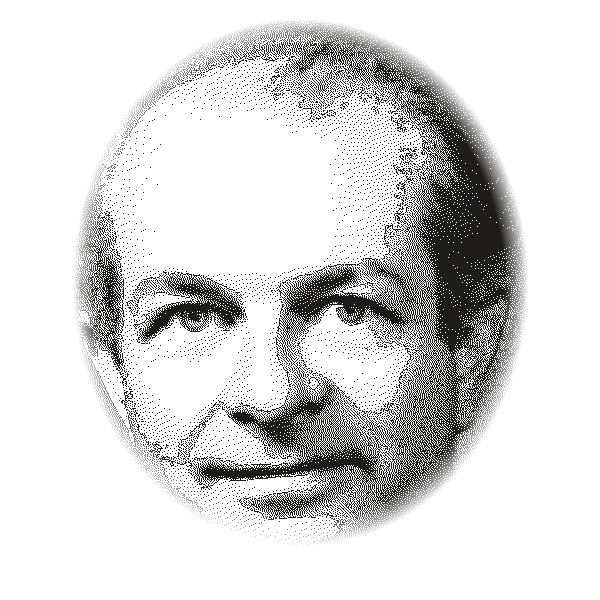
In the spring of 1948, while confined to bed in Oxford with a severe case of nephritis, an American chemist took a sheet of ordinary lined writing paper, a ruler, and a pencil, and began drawing polypeptide chains of amino acids. Linus Pauling was frustrated. For over a decade, crystallographers had bombarded fibrous proteins like keratin and collagen with X-rays, producing fuzzy, ambiguous diffraction patterns that defied structural interpretation. The British school, led by William Astbury, had attempted to force the data into rigid planar ribbons; but the bond lengths and angles always clashed with the laws of chemistry.
Pauling did not look at X-ray diffraction plates as abstract mathematical transforms. He looked at them with the physical instincts of a quantum builder who knew the exact steric dimensions, van der Waals radii, and bond angles of every atom in the periodic table. He folded the sheet of paper along precise parallel diagonal creases, keeping the peptide bond strictly planar—as quantum mechanical resonance demanded—while allowing the alpha-carbon bonds to rotate freely. When the edges of the folded paper met, the atoms aligned into an elegant, continuous, three-dimensional corkscrew: every carbonyl oxygen formed a tight, stabilizing hydrogen bond with the amide hydrogen four residues ahead. Pauling had discovered the alpha-helix: the fundamental structural motif of biological life.
This triumph was not an isolated flash of luck; it was the direct application of a scientific philosophy he had spent twenty years inventing: structural quantum chemistry. When Pauling arrived in Europe on a Guggenheim Fellowship in 1926 to study quantum mechanics under Arnold Sommerfeld in Munich, Niels Bohr in Copenhagen, and Erwin Schrödinger in Zürich, chemistry and physics were estranged empires. Physicists treated atoms as pristine mathematical wave functions; chemists treated them as static wooden balls connected by mysterious hook-and-eye bonds. Pauling realized that the new quantum mechanics was the missing key that could explain why carbon forms four symmetrical tetrahedral bonds, why water has a bent angle of 104.5 degrees, and why benzene is an extraordinarily stable hexagonal ring.
In a breathtaking sequence of papers published between 1928 and 1935, culminating in his 1939 masterpiece The Nature of the Chemical Bond, Pauling reconstructed the chemical sciences. To explain the tetrahedral geometry of methane ($CH_4$), where carbon uses one spherical $2s$ electron and three mutually perpendicular $2p$ electrons, Pauling introduced orbital hybridization: quantum wave functions mix and hybridize to form four equivalent, highly directed $sp^3$ hybrid orbitals pointing to the vertices of a tetrahedron. To explain the stability of molecules that could not be represented by a single Lewis structure, he formulated quantum resonance: the true molecule does not alternate rapidly between different structures; it exists as a quantum superposition, a hybrid resonance that confers immense thermodynamic stability.
Pauling created the scale that gave chemistry its modern predictive power: electronegativity. By comparing the actual bond dissociation energies of heteronuclear molecules ($A-B$) with the arithmetic and geometric means of their homonuclear counterparts ($A-A$ and $B-B$), he calculated the degree to which an atom attracts shared bonding electrons toward itself. He assigned fluorine the maximum value of 4.0, stepping down across oxygen, nitrogen, carbon, and hydrogen to the electropositive alkali metals. For the first time, a chemist could look at any pair of elements, read off the electronegativity difference, and immediately predict whether their bond would be non-polar covalent, polar covalent, or ionic.
Turning this chemical intuition toward human disease in 1949, Pauling made a conceptual leap that inaugurated the field of molecular medicine. Investigating sickle cell anemia, a hereditary disease that deformed red blood cells into rigid, sickle-shaped crescents that clogged microvascular capillaries, Pauling and Harvey Itano subjected the hemoglobin of healthy and sick individuals to paper electrophoresis. The sickle hemoglobin moved toward the anode at a noticeably slower velocity than normal hemoglobin. Pauling announced that sickle cell anemia was a 'molecular disease'—a condition caused not by bacterial infection, dietary deficiency, or environmental trauma, but by an altered electrical charge on a single mutated protein molecule. It was the first time in medical history that a human genetic disease was traced directly to a specific molecular defect.
Yet the very intuitive audacity that made Pauling legendary could occasionally blind him. In late 1952, racing against James Watson and Francis Crick to decipher the structure of DNA, Pauling relied on outdated, dehydrated X-ray photographs and rushed into print with a proposed triple-helical structure. In his haste, he placed the negatively charged phosphate backbones inside the core of the helix, packed tightly together at neutral pH. As Watson instantly recognized upon reading the preprint, Pauling's proposed nucleic acid was an impossible chemical absurdity: the negatively charged oxygen atoms would violently repel each other, blowing the molecule apart. The master of the chemical bond had forgotten the elementary electrostatic repulsion of ionization. Months later, Watson and Crick unveiled the correct double helix.
In the second half of his life, Pauling transitioned from structural biology to global political activism. Horrified by the biological hazards of radioactive fallout from atmospheric nuclear weapons testing, he mobilized the international scientific community. In 1958, he presented to the United Nations a petition signed by over 11,000 scientists demanding an immediate ban on nuclear testing. He was branded a communist sympathizer by the FBI, denied a passport by the State Department, and hauled before congressional committees. But he persisted, demonstrating through epidemiological calculations that atmospheric testing would cause hundreds of thousands of miscarriages and childhood leukemias. On October 10, 1963, the very day the Partial Nuclear Test Ban Treaty signed by Kennedy and Khrushchev went into effect, Pauling was awarded the Nobel Peace Prize—becoming the only person in history to win two undivided Nobel Prizes.
In his twilight years, Pauling's scientific reputation was somewhat clouded by his passionate advocacy of orthomolecular medicine and mega-doses of Vitamin C to cure everything from the common cold to advanced cancer—claims that rigorous clinical trials failed to substantiate. Yet when he died at his ranch in Big Sur, California, in 1994 at the age of ninety-three, his status as one of the titans of twentieth-century science was unassailable.
Linus Pauling transformed chemistry from an empirical collection of descriptive recipes into a rigorous, predictive, quantitative structural science. He bridged the quantum mechanics of the atom with the three-dimensional architecture of living organisms. Whenever a biochemist designs an antiviral drug to fit into the active site of a viral protease, or a materials scientist synthesizes a high-temperature superconductor, they operate within the molecular coordinates and resonant bonds that Linus Pauling first mapped upon a folded sheet of paper.
“The best way to have a good idea is to have a lot of ideas.”
“I have always looked forward to the future with optimism.”
“Science is the search for truth, that is, for the closest possible approximation of it.”
“Every aspect of the world today—even the politics and international relations—is affected by chemistry.”
“Do not let other people tell you what to think or what to believe.”
- The Nature of the Chemical Bond 1939
- The Structure of Proteins: Two Hydrogen-Bonded Helical Configurations of the Polypeptide Chain 1951
- Sickle Cell Anemia, a Molecular Disease 1949
- General Chemistry 1947
- No More War! 1958