Max Planck
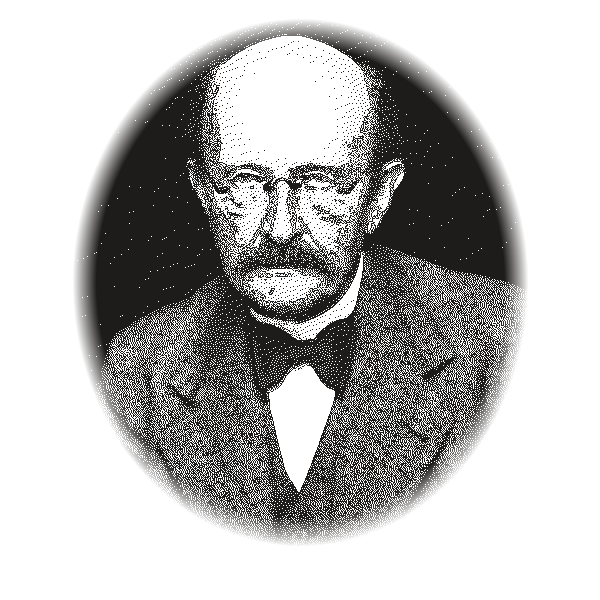
On a quiet Sunday afternoon in mid-October 1900, in the Grunewald suburb of Berlin, a conservative forty-two-year-old Prussian professor of theoretical physics sat down at his harmonium and then walked to his writing desk to compose an equation that would fracture the foundations of classical physics. Max Planck was by temperament, training, and heritage the ultimate custodian of nineteenth-century scientific orthodoxy. He revered the absolute permanence of the laws of thermodynamics with religious devotion; to him, the second law—the inexorable increase of entropy—was not an empirical approximation, but a sacred, cosmic absolute. He had spent two decades defending the continuous wave mechanics of Maxwell and the macroscopic conservation principles of Clausius against what he viewed as the messy, atomistic statistical compromises of Ludwig Boltzmann. Yet it was this most conservative of men who was forced by stubborn experimental data to commit what he later confessed was 'an act of desperation.'
The crisis was rooted in the spectral glow of an idealized blackbody—a closed cavity whose walls absorb and emit electromagnetic radiation in perfect thermodynamic equilibrium. Classical physics, resting upon the seamless continuum of Maxwellian electrodynamics and the equipartition theorem of statistical mechanics, made a horrifying prediction: as the wavelength of electromagnetic radiation approached zero in the ultraviolet and violet spectrum, the energy density inside the cavity should spiral toward infinity. The night sky should blind us with lethal gamma rays; a domestic coal oven should vaporize its room with infinite ultraviolet fury. This mathematical catastrophe—the 'ultraviolet catastrophe'—clashed violently with the pristine, high-precision measurements emerging from Heinrich Rubens and Ferdinand Kurlbaum at the Imperial Physical-Technical Institute in Berlin. The experimental data showed that high-frequency radiation did not explode into infinity; it dropped precipitously to zero.
Planck tackled the problem through the lens of entropy. For years, he had resisted Boltzmann's probabilistic interpretation, seeking a purely macroscopic derivation of Wilhelm Wien's radiation law. But Rubens visited Planck's home and shared the newest low-frequency infrared measurements: Wien's law held at high frequencies, but collapsed completely at long wavelengths. That evening, by interpolating mathematically between the two known asymptotic behaviors of the second derivative of entropy with respect to energy, Planck produced a single formula that perfectly reconciled the entire spectral curve. When Rubens tested the formula the following morning against his instruments, he found it agreed with nature to within the precision of the apparatus.
Yet Planck was not satisfied with an empirical curve-fit. A mathematical coincidence was not a physical explanation. For eight agonizing weeks, he subjected his formula to exhaustive theoretical interrogation. To deduce why entropy behaved according to his mathematical interpolation, he was driven to adopt the very tool he had spent his career resisting: Boltzmann's combinatorial definition of entropy as the logarithm of microstates. But to count the ways energy could be distributed among the vibrating atomic resonators of the cavity walls, Planck discovered that he could not treat energy as a smooth, continuous fluid. He was forced to assume that energy is partitioned into discrete, indivisible packets—quanta—each proportional to the vibrational frequency of the resonator multiplied by a tiny, fundamental universal constant: $E = h\nu$.
The introduction of the constant $h$—the quantum of action—was an intellectual earthquake whose shockwaves Planck spent the rest of his life attempting to contain. In classical mechanics, action is a continuous continuum; nature does not make jumps (natura non facit saltus). Planck had assumed that quantization was merely a formal mathematical artifact, an accounting trick of combinatorial calculation that would vanish when the limit of $h \rightarrow 0$ was taken at the end of the derivation. But $h$ refused to vanish. It was a stubbornly finite, non-zero constant of nature: $6.626 \times 10^{-34}$ joule-seconds. Energy could not be absorbed or emitted in continuous streams; it could only be traded in discrete coinage, like grains of sand or individual coins.
For nearly a decade, Planck was the most reluctant revolutionary in the history of science. While a young patent clerk in Bern named Albert Einstein audaciously proposed in 1905 that radiation itself was composed of localized physical quanta of light—photons—and while Niels Bohr in 1913 quantized the orbits of electrons inside the Rutherford atom, Planck labored tirelessly to reconcile his quantum with classical Maxwellian wave theory. He attempted to confine quantization solely to the emission process, leaving absorption continuous, or to treat the quantum as an interaction constraint of matter rather than a property of empty space. He was like an architect who had discovered a crack in the foundation of a cathedral and spent years attempting to prove that the crack was merely an illusion of mortar.
Yet his personal conservatism was matched by an unassailable moral integrity and intellectual honesty. When experimental evidence validated Einstein's photoelectric effect and Bohr's spectral lines, Planck bowed to reality. He recognized that the old physics was dead, famously remarking that a new scientific truth does not triumph by convincing its opponents, but rather because its opponents eventually die and a new generation grows up that is familiar with it. His later life was marked by immense personal tragedy: his eldest son was killed in the First World War; his twin daughters died in childbirth; his home and complete library were obliterated by Allied bombing in 1944; and his surviving son Erwin was executed by the Gestapo in 1945 for his role in the July 20 plot against Hitler.
Through this unbearable suffering, Planck maintained his austere, stoic devotion to the objective reality of the natural order. He refused to abandon Germany, choosing to endure the collapse of his homeland to preserve the remnants of German science for future generations. When he died in Göttingen in 1947 at the age of eighty-nine, his tombstone was inscribed with only his name and a single line of mathematical text: $h = 6.62 \cdot 10^{-27}\text{ erg sec}$.
Today, the quantum constant $h$ is recognized as the threshold separating the classical macroworld from the subatomic foundations of reality. Without Planck's constant, atoms would instantly collapse as orbiting electrons radiated away their energy into the void; chemistry would be impossible; solid matter would dissolve; stars would cease to shine. Every semiconductor, laser, magnetic resonance imager, and quantum computer operates upon the physical landscape he opened in October 1900.
Max Planck's legacy is the supreme testament to the power of intellectual humility before empirical fact. He did not seek to overturn the classical world; he sought only to describe the truth of a blackbody cavity with absolute thermodynamic integrity. By listening to the whisper of the data rather than the comforting dogmas of established theory, this conservative custodian opened the door to the quantum age, demonstrating that when human reason honestly confronts nature, even its most cherished assumptions must yield to the truth of the cosmos.
“Science cannot solve the ultimate mystery of nature. And that is because, in the last analysis, we ourselves are a part of the mystery that we are trying to solve.”
“A new scientific truth does not triumph by convincing its opponents and making them see the light, but rather because its opponents eventually die, and a new generation grows up that is familiar with it.”
“An act of desperation... I had to obtain a positive result, under any circumstances and at whatever cost.”
“Experiments are the only means of knowledge at our disposal. The rest is poetry, imagination.”
“Insight must precede application.”
- Über den zweiten Hauptsatz der mechanischen Wärmetheorie 1879
- Über eine Verbesserung der Wienschen Spektralgleichung 1900
- Zur Theorie des Gesetzes der Energieverteilung im Normalspektrum 1900
- Vorlesungen über Thermodynamik 1897
- The Theory of Heat Radiation 1906
- Where Is Science Going? 1932