Michelangelo Buonarroti
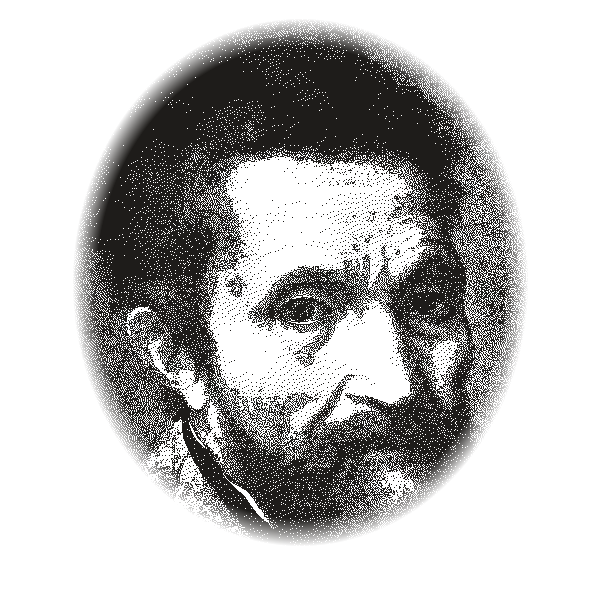
In the blinding white quarries of Carrara in northern Tuscany, high upon the jagged marble crags of Monte Altissimo, a solitary, dust-covered Florentine stood measuring colossal blocks of stone. Michelangelo Buonarroti did not look at a quarry as an architect looks at building material. He looked at the mountain as a tomb of living forms waiting for resurrection. For Michelangelo, carving marble was not an additive process of modeling clay onto an armature; it was a violent, heroic subtraction—a stripping away of the superfluous stone that imprisoned a divine form. In his celebrated sonnets, he wrote: 'The greatest artist has no single concept that a marble block does not contain within itself, enclosed in its superfluous stone; and to this only the hand that obeys the intellect can attain.'
To liberate that captive figure, Michelangelo possessed an anatomical knowledge so profound that it shocked his contemporaries. As a teenage apprentice in Florence under the patronage of Lorenzo de' Medici, he had obtained secret nighttime permission from the prior of the monastery of Santo Spirito to dissect human cadavers in the mortuary. Under the flickering light of tallow candles, inhaling the stench of decomposition, he stripped back the skin, muscle fibers, tendons, and vascular networks of corpses with a dissecting scalpel. He learned where each muscle anchored to the periosteum of the bone, how the bicep swells during supination, and how the ribcage expands in terror or ecstasy. When he sculpted, he did not carve skin; he carved tension from the inside out.
In 1501, when the city fathers of Florence gave him a damaged, nineteen-foot block of Carrara marble that another sculptor had botched and abandoned forty years earlier, Michelangelo was twenty-six. From that scarred, narrow stone, he extracted the colossal David. Previous sculptors had depicted David standing victorious over the severed head of Goliath, sword in hand. Michelangelo captured David in the agonizing moment before the battle: his brow furrowed with focused calculation, his nostrils flared, his right hand pulsing with swollen veins against his thigh, his weight resting in extreme contrapposto upon his right leg while the left leg steps lightly, ready to pivot. David was not merely a biblical shepherd; he was the embodiment of civic republican defiance, an explosive kinetic tension frozen in crystalline stone.
Yet his patron, Pope Julius II, had no intention of leaving him in peace with his chisels. In 1508, the Pope ordered Michelangelo to paint the ceiling of the Sistine Chapel in Rome: twelve thousand square feet of curving, barrel-vaulted plaster suspended sixty feet in the air. Michelangelo fiercely resisted, protesting that he was a sculptor, not a painter. But the Pope was absolute. Dismissing his Florentine assistants, Michelangelo designed his own cantilevered wooden scaffolding that spanned the chapel without touching the floor, climbed the ladders daily, and spent four agonizing years painting on his back, his neck craned backward, paint dripping into his eyes, his skin covered in plaster crust.
The result was the greatest pictorial cycle in Western history. Across nine central panels, flanked by titanic prophets and sibyls, Michelangelo painted the cosmic drama of Genesis. In The Creation of Adam, he created the definitive icon of Western art: the divine Creator, enveloped in a swirling mantle resembling a human brain with its gyri and sulci, reaching forward across an electric void to touch the limp finger of the newly formed Adam. Adam's muscular, languid body does not spring from mud; he receives the divine spark through a gap of barely an inch. God does not speak the universe into being; He communicates will through physical touch and kinetic grace.
As the years deepened and the political liberties of Florence were crushed by Medici despots, Michelangelo's art grew increasingly tragic and spiritual. In the unfinished Captives—the Slaves carved for the tragic, repeatedly scaled-down tomb of Julius II—he invented the aesthetic of the non-finito. Massive, muscular male bodies struggle desperately to break free from the rough-hewn stone, their faces and limbs still partially submerged in uncarved rock. These were not abandoned failures; they were metaphysical manifestos: the immortal soul struggling to tear itself free from the corrupt, heavy prison of material flesh.
In his seventies, having survived popes, wars, and plagues, he was appointed chief architect of St. Peter's Basilica. Bramante, Raphael, and Antonio da Sangallo had left behind an indecisive, chaotic tangle of competing building phases. Michelangelo cut through the confusion with imperial decisiveness: he swept away Sangallo's dark, compartmentalized corridors, restored Bramante's bold Greek-cross plan, and engineered the colossal double-shelled dome that would define the Roman skyline. Drawing upon Brunelleschi's Florentine dome, but soaring higher with sixteen radial travertine ribs and a majestic drum of coupled Corinthian columns, Michelangelo built a mountain of stone to crown the tomb of the apostle.
He worked without pay, declaring that he served only for the love of God and the salvation of his soul. In the final weeks of his life, blind in one eye and shivering in the Roman winter, the eighty-eight-year-old titan stood in his studio chiseling the Rondanini Pietà—a spectral, heartbreakingly tender carving where the body of the dead Christ merges completely into the sheltering torso of his weeping mother.
Michelangelo Buonarroti died in Rome in February 1564, just weeks before his eighty-ninth birthday. His body was smuggled out of Rome in a bale of merchandise by his nephew so that he could be buried in his beloved Florence, in the basilica of Santa Croce.
Today, Michelangelo remains the supreme titan of the human form. He proved that physical anatomy, when illuminated by spiritual agony and mathematical proportion, can express the deepest mysteries of existence. He found the human body a vessel of clay; he left it a monument of divine architecture, proving that the greatest art is nothing less than the liberation of the soul from the superfluous stone of the world.
“The sculpture is already complete within the marble block, before I start my work. It is already there, I just have to chisel away the superfluous material.”
“I saw the angel in the marble and carved until I set him free.”
“Genius is eternal patience.”
“The greater danger for most of us lies not in setting our aim too high and falling short; but in setting our aim too low, and achieving our mark.”
“Lord, make me see thy glory in every place.”
- Pietà (St. Peter's, Rome) 1499
- David (Galleria dell'Accademia, Florence) 1504
- Sistine Chapel Ceiling (Vatican) 1508-1512
- Tomb of Julius II (Moses / Slaves) 1505-1545
- Laurentian Library (San Lorenzo, Florence) 1524
- The Last Judgment (Sistine Chapel, Rome) 1536-1541
- St. Peter's Basilica Dome (Rome) 1546-1564