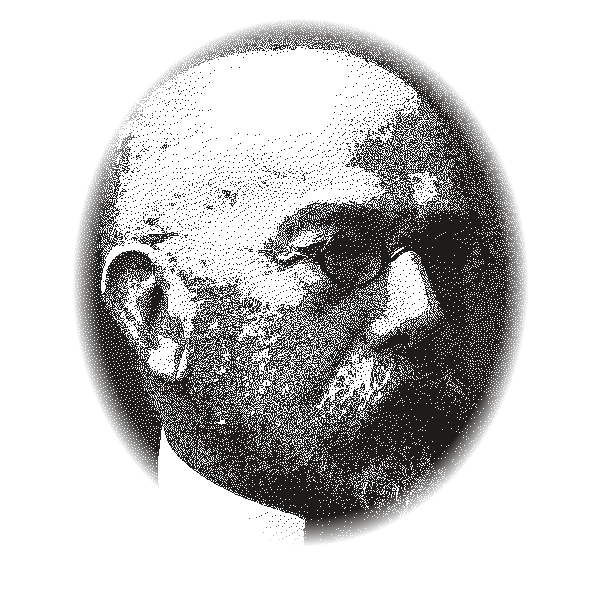
Robert Koch
Until the final quarter of the nineteenth century, pathology lacked an ontological anchor. Medicine possessed an exhaustive taxonomy of clinical end-states—consumption, putrid fever, splenic apoplexy, hospital gangrene—yet these labels recorded the trajectories of physiological decay rather than determinate causal mechanisms. Disease was conceptualized as dyscrasia: an imbalance of humoral equilibria, a spontaneous chemical fermentation within tissues, or the atmospheric consequence of miasmatic effluvia rising from subterranean decomposition. Where living agents were suspected, they were dissolved into the doctrine of pleomorphism. Championed by botanists and pathologists of the stature of Carl von Nägeli and Theodor Billroth, pleomorphism maintained that lower organisms possessed near-infinite morphological plasticity. Bacteria were viewed not as autonomous, immutable species, but as protean vegetative forms that continuously morphed from innocuous micrococci into lethal rods or filamentous spirals depending on the acidity, temperature, or chemical decomposition of their environment. If an organism’s form and function were dictated entirely by the medium in which it arose, the concept of a specific etiology was untenable; the microbe was not the cause of the pathology, but its epiphenomenal product.
This theoretical impasse was fundamentally an artifact of physical and optical technique. The universal vessel of nineteenth-century bacteriology was the liquid infusion—broths of boiled meat, hay infusions, or biological fluids such as urine and blood serum. In a three-dimensional fluid suspension, microbial populations are subject to continuous Brownian displacement, thermal convection, and flagellar propulsion. Any inoculation into a liquid medium creates a dynamic, multi-species competition governed by differential growth kinetics. Organisms outcompete, suppress, and succeed one another over hours. When an investigator sampled this fluid across successive days, the changing morphological landscape appeared to validate pleomorphic transmutation. The observer was viewing a cinematographic succession of distinct species, but through the fluid medium, he mistook ecological succession for ontogenetic transformation. The medium enforced a physical averaging: individual lineages were mechanically inseparable.
This fluid-phase blindspot was exacerbated by the physical limits of contemporary optics. Unstained bacteria are phase objects; their refractive indices diverge only marginally from the aqueous mounting fluids in which they are suspended. Visualized under dry, uncorrected brightfield illumination, uncolored bacteria present virtually zero amplitude contrast, generating diffraction patterns and phase halos that obliterate fine morphological boundaries. Pathologists relied on freehand sketches to document what their eyes strained to register through spherical aberration, embedding idiosyncratic perceptual biases into the medical literature. Pathology was stranded in a regime of qualitative conjecture, unable to isolate the fundamental biological agent beneath the noise of its fluid environment.
In the rural isolation of Wollstein in the Province of Posen, away from the clinical amphitheaters of Berlin and Vienna, Robert Koch grasped that the problem of infectious disease was not biological or clinical, but spatial, mechanical, and optical. To prove that a specific disease stemmed from an immutable living entity, one had to arrest the continuous flux of the fluid phase. The organism had to be forced out of three-dimensional hydrodynamic chaos into a static, two-dimensional coordinate system.
The foundational insight occurred through the observation of an everyday substrate: the surface of a boiled potato left exposed to the ambient air of the laboratory. Koch noted that the potato did not turn into an undifferentiated slime. Instead, it became studded with discrete, isolated, brightly colored droplets—some pure white, others canary yellow, red, or gray. When he touched a platinum wire to an individual droplet and placed it beneath his microscope, he observed a startling regularity: the cells within any single droplet were morphologically identical and entirely uniform in behavior. Koch recognized that the potato’s solid starch surface acted as a physical arrestor. A solitary airborne bacterium, sedimenting onto the solid matrix, was stripped of its translational freedom. Trapped at a fixed spatial coordinate, its progeny could not disperse; through rounds of binary fission, it underwent localized, clonal expansion, generating a macroscopic colony composed of tens of millions of identical descendants derived from a single ancestral cell. The macroscopic colony was the physical amplification of the microscopic individual.
The native potato, however, was opaque, chemically variable, and physiologically hostile to the fastidious pathogens that colonize mammalian tissue. Koch set out to construct an artificial solid matrix that combined optical transparency with the nutrient richness of animal broths. His initial solution—incorporating bone gelatin into meat infusions, poured onto flat glass slides beneath a bell jar—unlocked the ability to perform serial streak dilutions. Yet gelatin possessed fatal physical limitations: it liquefies at approximately twenty-five degrees Celsius, well below the mammalian physiological baseline of thirty-seven degrees necessary for the cultivation of human pathogens, and it is readily degraded by bacterial proteolytic enzymes, reducing the solid substrate back into a turbid liquid.
The structural resolution arrived through Fannie Hesse, the New Jersey-born wife of Koch’s associate Walther Hesse, who suggested the incorporation of agar-agar—a sulfated galactan polysaccharide extracted from red algae, which she utilized in domestic jelly preparation. Agar represented an ideal physical matrix. It displays profound thermal hysteresis: it melts into a sol at approximately eighty-five degrees Celsius but remains a stable, clear, elastic gel until cooled below forty degrees. Once set, it withstands incubation at human body temperature without losing its mechanical rigidity, and its structural polysaccharide backbone is recalcitrant to enzymatic digestion by almost all mammalian pathogenic bacteria.
With the solid nutrient matrix established, Koch constructed the remaining pillars of his experimental engine: the chemical enhancement of visual contrast, the optical mastery of wave refraction, and the formalization of causal deduction. To reveal the invisible morphology of the immobilized cells, he abandoned the live aqueous mount entirely. He heat-fixed bacterial films directly to glass coverslips, irreversibly coagulating their proteins, and treated them with synthetic basic aniline dyes—methylene blue, methyl violet, Bismarck brown, and basic fuchsin—harvested from the German coal-tar chemical industry. These cationic chromophores bound selectively to the acidic components of the bacterial cell, radically altering their absorption spectra and transforming subtle phase variations into stark, unmistakable amplitude contrast.
To resolve these stained structures, Koch coupled his microscope to Ernst Abbe’s substage condenser and employed homogeneous oil-immersion objective systems manufactured by Carl Zeiss. By placing a drop of cedarwood oil, whose refractive index matched that of the crown glass slide and coverslip, in the optical gap between the specimen and the front lens element, he eradicated the refractive boundary that plagued dry systems. Wide-angle rays that had previously been lost to total internal reflection were captured, maximizing the numerical aperture of the system and driving optical resolution to its theoretical physical limit. Koch then replaced the human eye with the photographic apparatus, utilizing wet-collodion and gelatin dry plates. Photomicrography permanently removed the subjectivity of the draftsman’s hand, converting transient visual impressions into incontrovertible, mechanically reproducible optical records.
Upon this triad of spatial immobilization, chemical staining, and oil-immersion photomicrography, Koch erected an axiomatic protocol for biological causation. Codified with his colleague Friedrich Loeffler, the Koch Postulates transformed etiology into a rigorous deductive sequence. The suspect organism had to be universally demonstrated in every diseased subject and absent from the healthy. It had to be mechanically isolated from host tissues and propagated through successive generations in pure solid culture, purging all residual fluids and soluble poisons. The pure monoculture had then to be inoculated into a naive animal host, where it was required to reproduce the specific pathology in full. Finally, the identical organism had to be recovered from the experimentally infected host and re-isolated in pure culture. Only upon the unbroken closure of this experimental loop could a living entity be designated the necessary and sufficient cause of a clinical disease.
The introduction of Koch’s deterministic apparatus collided immediately with the reigning authorities of nineteenth-century medicine. His most formidable adversary was Rudolf Virchow, the architect of cellular pathology. Virchow maintained that disease arose exclusively from endogenous aberrations in cellular nutrition and metabolism triggered by mechanical or chemical irritation. To Virchow, attributing complex systemic pathologies to external micro-organisms was a regression to ontological demonology—an evasion of the cell's internal physiological dynamics. He dismissed the germ theory as an oversimplification that disregarded the primacy of the host’s anatomical substrate.
An equally trenchant opposition emerged from the environmental hygienists, led by Max von Pettenkofer in Munich. Pettenkofer rejected the premise that the physical presence of a bacterial monoculture was sufficient to ignite an epidemic. He championed a tripartite soil-interaction model in which the infectious agent was inert on its own, requiring fermentation within moist, porous soil and subterranean groundwater tables, alongside individual physiological susceptibility, to generate disease. The ideological rift reached an apex in October 1892 during the Hamburg cholera epidemic. In a dramatic gesture of scientific defiance, the seventy-four-year-old Pettenkofer requested from Koch’s Berlin laboratory a live broth culture of freshly isolated Vibrio cholerae and, in the presence of witnesses, drank it. Though he suffered severe diarrhea and malaise, he did not develop algid cholera, nor did he die. To Pettenkofer, this proved that the microbe was powerless without the environmental matrix. To Koch, it demonstrated only the variable acid barrier of the human stomach and the unpredictable boundary conditions of individual physiological susceptibility—factors that could modify, but never invalidate, the causal necessity of the pathogen.
The decisive watershed had already occurred a decade earlier, on the evening of March 24, 1882, at the monthly meeting of the Berlin Physiological Society. Before an audience that included Virchow, Paul Ehrlich, and Emil du Bois-Reymond, the thirty-eight-year-old Koch presented his treatise on the etiology of tuberculosis. Consumption was then the leading cause of mortality across the Western world, responsible for one in every seven deaths, and widely regarded as an inherited constitutional diathesis or an inevitable consequence of systemic exhaustion.
Koch systematically dismantled this belief. He projected photographic plates of the slender, curved bacillus he had unmasked within tubercular lesions, rendered visible through a demanding staining protocol utilizing alkaline methylene blue counter-stained with vesuvin. He presented rows of test tubes containing transparent slopes of coagulated cattle-blood serum, upon which the slow-growing Mycobacterium tuberculosis had formed dry, scale-like colonies over weeks of incubation at mammalian body temperature. Finally, he produced the pathology records of hundreds of guinea pigs, rabbits, and mice inoculated with these pure cultures, all of which reproduced the pathognomonic miliary tubercles. When Koch concluded his address, the assembly of physiological authorities remained silent. Virchow, legendary for his devastating counterarguments and polemical skill, rose from his seat, put on his coat, and walked out of the hall without offering a single word of rebuttal. The mechanical, optical, and logical framework was so complete that it admitted no dialectical escape.
Koch’s transformation of the scientific landscape extended far beyond the specific pathogens he cataloged. By operationalizing spatial isolation, physical contrast, and causal sufficiency, he altered the epistemic baseline of the life sciences. Before Koch, the microscopic world was conceived as an amorphous continuum, an unruly soup without enduring boundaries or stable species. Koch proved that the microbial realm is governed by the same discrete, taxonomic order that characterizes macroscopic biology. The solid culture plate did for bacteriology what the periodic table did for chemistry: it stabilized volatile mixtures into discrete, identifiable elements that could be isolated, named, and deployed in repeatable reactions.
Every modern discipline that relies upon cellular manipulation—from the clonal selection of cell lines and the industrial synthesis of recombinant proteins to the plating techniques of clinical diagnostic laboratories—rests upon Koch's physical stratagem of arresting translational kinetic energy on a solid surface. When molecular biologists isolate a single plasmid via colony hybridization, or immunologists clone a hybridoma cell to harvest a monoclonal antibody, they operate within an experimental grammar established on boiled potato slices and gelatin plates in Wollstein.
Through this lens, disease ceased to be a qualitative narrative of systemic imbalance or an unpredictable negotiation between human tissue and atmospheric poisons. Koch re-engineered pathology into a deterministic encounter between biological entities. In doing so, he stripped etiology of philosophical conjecture and permanently re-anchored medicine to physical mechanics, optical physics, and the reproducible certainty of pure spatial isolation.
“If my efforts have led to greater success than is usually the case, that is due to the fact that during my journeys through medical fields I came upon regions where the gold was still lying on the road.”
“To trace the etiology of tuberculosis, it is necessary to enter upon the study of the organism itself in its isolation.”
“The day will come when man will have to fight noise as relentlessly as cholera and pestilence.”
“Bacteriology is not an art of conjecture, but a science of absolute demonstration.”
- Die Aetiologie der Milzbrand-Krankheit (Anthrax Life-Cycle) 1876
- Verfahren zur Untersuchung und Photographiren der Bakterien 1877
- Untersuchungen über die Aetiologie der Wundinfectionskrankheiten 1878
- Zur Untersuchung von pathogenen Organismen (Solid Media) 1881
- Die Aetiologie der Tuberculose (Discovery of M. tuberculosis) 1882
- Ueber die Cholerainfection (Cholera Commission Reports) 1884