Thucydides
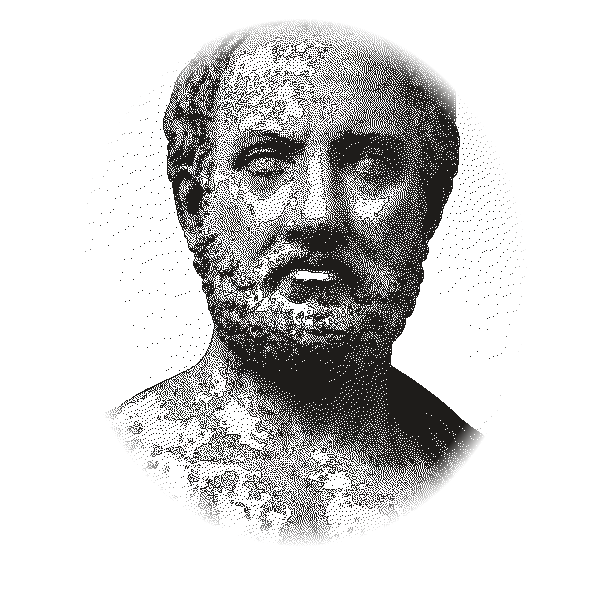
In the spring of 431 BC, as the first Spartan hoplites marched across the Isthmus of Corinth to lay waste to the olive groves of Attica, an Athenian aristocrat dipped his reed pen into iron-gall ink and began compiling a record of the conflict. He was barely thirty years old, yet he possessed an eerie, clinical certainty regarding what lay ahead. Where his fellow citizens celebrated the clash as a brief, heroic skirmish that would quickly reaffirm Athenian naval supremacy, Thucydides foresaw that this war would be an existential convulsion—a catastrophe greater than any that had preceded it, tearing through the Greek world until the foundations of Hellenic civilization collapsed in ruin. He did not write to flatter Athenian vanity, nor to celebrate military triumph with the dramatic flair of Herodotus or the tragic poetry of Homer. He wrote with the dispassionate, diagnostic rigor of a physician recording the terminal pathology of an empire.
In the second year of the war, a horrific epidemic swept out of Ethiopia and struck the overcrowded city of Athens, where tens of thousands of rural refugees were packed inside the Long Walls under the defensive strategy of Pericles. Thucydides contracted the plague himself. He endured the burning fever, the ulcerated throats, the bloody retching, and the putrid stench of the sickrooms, and he watched his closest friends die unattended in the streets. Yet while superstitious citizens blamed the wrath of Apollo, Thucydides took up his notebook. He recorded the physical symptoms with forensic precision—noting the red skin, the livid pustules, the unquenchable internal thirst that drove dying men to plunge into public cisterns—so that if it ever broke out again, mankind would recognize its signature. More terrifying than the biological destruction was the psychological unraveling: as men saw that the pious and the profane died with equal impartiality, all restraint of human and divine law dissolved. In a matter of months, an enlightened democratic polis degenerated into a jungle of immediate hedonism and unbridled animal selfishness.
In 424 BC, serving as an elected Athenian general (strategos), Thucydides was stationed off Thasos in command of a squadron of seven triremes. When the brilliant Spartan commander Brasidas launched a lightning winter assault on the strategic Athenian colony of Amphipolis—the gateway to the timber and gold mines of Thrace—Thucydides raced across the Aegean through winter storms to relieve the garrison. He arrived half a day too late: Amphipolis had surrendered hours before his ships dropped anchor.
The Athenian assembly, whipped into hysterical fury by populist demagogues, demanded a scapegoat. Thucydides was convicted of military negligence and condemned to twenty years of exile. What appeared to be the ruin of his political life became the supreme stroke of historical fortune. Stripped of patriotic duty and freed from Athenian political factionalism, Thucydides spent the next two decades traveling freely throughout the Peloponnese, interviewing Spartan kings, Corinthian merchants, Theban generals, and Athenian exiles. His exile became an instrument of radical epistemological detachment: he was able to observe the tragedy of the war from both sides of the battle line, viewing the conflict not as a loyal partisan, but as an impartial analyst of human nature.
Out of this exile emerged the foundational breakthrough of modern political realism: the recognition of structural causation. While ordinary chroniclers attributed the war to immediate diplomatic incidents—a border dispute at Epidamnus, the Megarian Decree, or the alliance with Corcyra—Thucydides brushed past the superficial triggers to uncover the underlying tectonic shift: "The real cause I consider to be the one which was formally most kept out of sight. What made war inevitable was the growth of Athenian power and the fear which this caused in Sparta."
This formulation—known to modern geopolitics as the "Thucydides Trap"—revealed that state behavior is governed not by abstract moral ideals, religious dogmas, or individual whim, but by the structural pressures of the international system. In the absence of a sovereign authority to enforce justice among states, nations exist in a state of nature where survival is precarious. Thucydides identified the triad of universal motives that compel political communities to seek hegemony: fear (phobos), honor (time), and self-interest (opheleia). A rising power cannot stop expanding without endangering its own security, and an established hegemon cannot yield without inviting its own destruction.
The philosophical summit of his history is the Melian Dialogue of 416 BC, the most chilling dissection of raw power ever composed. The tiny island of Melos, a Dorian colony that had remained neutral in the war, was surrounded by a massive Athenian fleet demanding surrender and tribute. The Melian elders pleaded for justice, appealing to the common laws of humanity, the shame of unprovoked aggression, and the favor of the gods who protect the innocent.
The Athenian envoys dismissed their moral appeals with brutal, crystalline clarity: "For ourselves, we shall not trouble you with specious pretenses... since you know as well as we do that right, as the world goes, is only in question between equals in power, while the strong do what they have the power to do and the weak accept what they have to accept."
When the Melians refused to submit, trusting in honor and hope, the Athenians besieged the city, breached the walls, executed every adult male, sold all the women and children into slavery, and repopulated the island with five hundred Athenian colonists. Thucydides offered no direct moral commentary on the slaughter; he simply placed it immediately before his next chapter: the Sicilian Expedition. In that juxtaposition lay his devastating structural judgment: having abandoned all moral restraint on Melos, the Athenian democracy was immediately seduced by the megalomaniacal hubris of Alcibiades to send its greatest armada to conquer Sicily—an expedition that ended in total annihilation in the stone quarries of Syracuse, where forty thousand Athenian soldiers were starved, beaten, and buried in lime.
His history terminates abruptly in mid-sentence in the year 411 BC, six years before the final fall of Athens. Tradition records that Thucydides returned to Athens upon the expiration of his twenty-year exile in 404 BC, only to be murdered by thieves along an isolated road in Thrace.
Yet he left behind a monument that has outlasted every bronze statue and marble temple of the ancient world. In his famous opening programmatic statement, he wrote with proud, prophetic defiance: "My work is not a piece of writing designed to meet the taste of an immediate public, but was done to last for ever"—a ktema es aiei, a possession for all time. Thucydides removed the gods from human history and forced humanity to gaze into the unblinking mirror of its own nature. He proved that empires rise through energy and daring, expand through fear and self-interest, and fall through hubris and moral rot; and that so long as human nature remains unchanged, the tragedy of power will recur in every generation of mankind.
“The strong do what they have the power to do and the weak accept what they have to accept.”
“What made war inevitable was the growth of Athenian power and the fear which this caused in Sparta.”
“My work is not a piece of writing designed to meet the taste of an immediate public, but was done to last for ever.”
“The secret of happiness is freedom, and the secret of freedom is courage.”
“Self-control is the chief element in self-respect, and self-respect is the chief element in courage.”
- History of the Peloponnesian War (Book I: Causes and Outbreak) c. 420 BC
- History of the Peloponnesian War (Book II: The Plague and Pericles' Funeral Oration) c. 415 BC
- History of the Peloponnesian War (Book III: The Mytilenean Debate and Corcyra Stasis) c. 415 BC
- History of the Peloponnesian War (Book V: The Peace of Nicias and Melian Dialogue) c. 410 BC
- History of the Peloponnesian War (Books VI–VII: The Sicilian Expedition) c. 405 BC