Claude Bernard
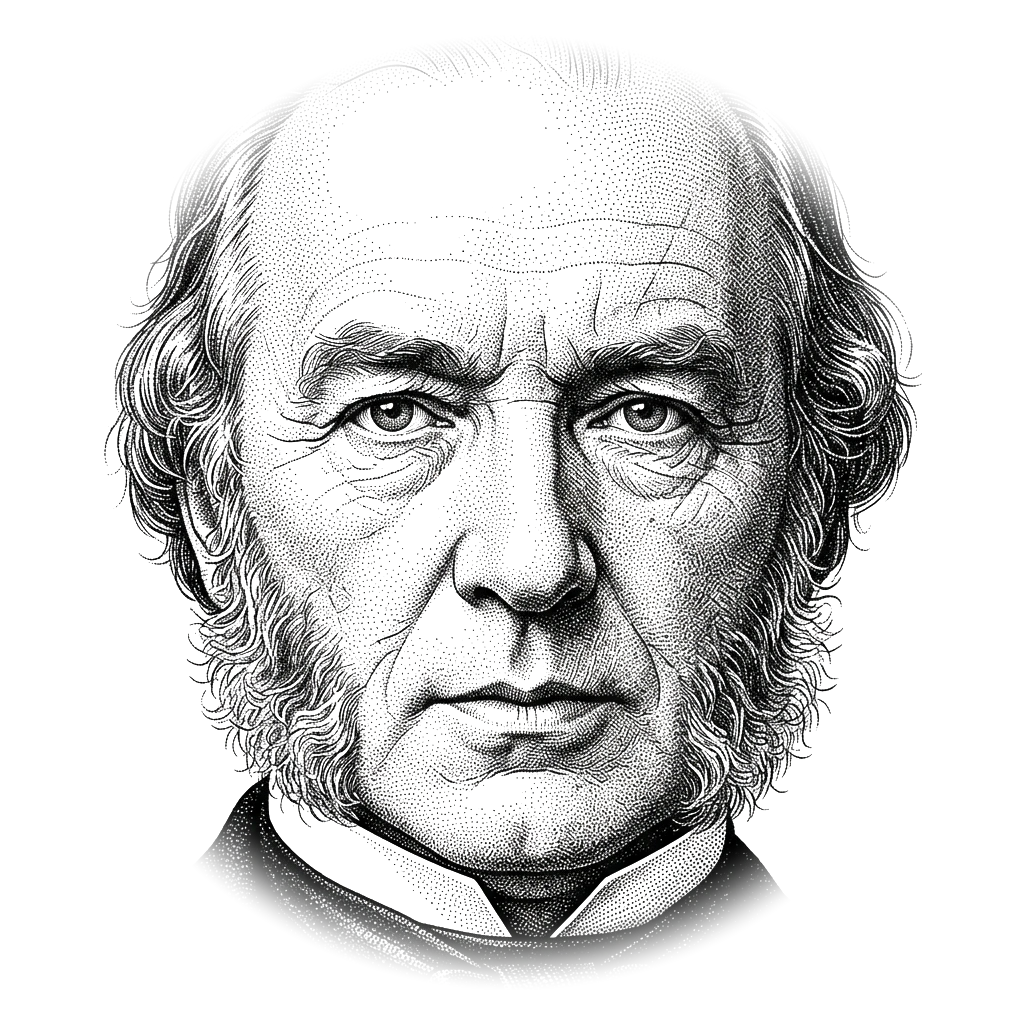
In the winter of 1843, in a damp cellar beneath the Collège de France that he called his "physician’s tomb," Claude Bernard stood over an open abdomen, determined to catch a living body in the act of being alive.
At the time, biology was paralyzed by an intellectual civil war. On one side stood the vitalists, following the anatomist Xavier Bichat, who had defined life as "the set of functions that resist death." To them, living beings were governed by capricious, non-physical forces exempt from the laws of physics and chemistry. To touch an organ with a scalpel or chemical reagent was, in their view, to destroy the very vitality one sought to measure. On the other side stood the chemical reductionists—led by Justus von Liebig and Jean-Baptiste Dumas—who treated the organism as a passive combustion furnace. In their rigid division, plants were nature’s sole synthesizers, building complex organic compounds out of soil and air, while animals were mere consumers, capable only of breaking those molecules down through oxidation. An animal was a mechanical burner consuming imported fuel.
Bernard looked into the open wound and saw that both camps missed the same fundamental truth: life is neither a lawless ghost nor a passive chemical retort. It is an active, self-governing architecture.
Bernard attacked the doctrine of animal passivity first. Prevailing doctrine held that blood glucose came exclusively from dietary carbohydrates absorbed in the gut. To test this, Bernard fed a dog an exclusively carnivorous diet of boiled meat for several months, completely free of starches or sugar. He then cannulated two distinct vessels: the portal vein, which carries blood from the digestive tract directly into the liver, and the hepatic veins, which carry blood out of the liver toward the heart.
Applying Trommer’s copper reagent to both samples, the result was stark: portal blood entering the liver was devoid of sugar, while hepatic blood exiting the liver was rich in glucose.
The animal was not simply combusting food imported from the outside. Its liver was actively synthesizing sugar from protein and fat.
To refute critics who claimed the glucose was merely residual dietary sugar trapped in tissue, Bernard devised an experiment of startling simplicity in 1855: the foie lavé, or "washed liver." He excised the fresh liver of a healthy dog and perfused its blood vessels with cold water through the portal vein for forty minutes, until the fluid running out tested completely negative for sugar. He had rinsed the organ clean of every free glucose molecule.
He left the cold, sugarless organ sitting on a glass plate on his laboratory bench at room temperature. Returning several hours later, he tested the tissue again: the liver was once more saturated with sugar.
Bernard had isolated two distinct physiological realities: an insoluble storage reserve and a continuous enzymatic process converting that store into soluble blood sugar. In 1857, he isolated the substance itself—an animal starch he named glycogen. The boundary separating the plant and animal kingdoms collapsed. Animals were not passive chemical recipients; they possessed internal chemical factories that synthesized compounds to meet internal demands.
Having proven that the body possessed internal synthesis, Bernard discovered how it governed internal distribution.
In 1851, investigating the nervous system's influence on body heat, he severed the cervical sympathetic nerve in a rabbit's neck. He expected the paralyzed ear to grow cold. Instead, the ear flushed with arterial blood, the vessels engorged, and the local temperature jumped by several degrees. When he later stimulated the cut nerve with electric current, the vessels clamped down, the ear turned pale, and the temperature dropped.
Bernard had discovered vasomotor nerves: the active muscular dilation and constriction of blood vessels controlled by the sympathetic nervous system. Circulation was not an unvarying cascade driven blindly by the pump of the heart. The nervous system possessed a dynamic throttle, continuously tuning the caliber of conduits to channel heat, oxygen, and nutrients wherever tissues required them.
Experiment by experiment, Bernard demonstrated that living tissues are never in direct contact with the external atmosphere. When he showed that curare paralyzes the motor endplate between nerve and muscle—leaving sensory nerves and muscle contractility intact—and that carbon monoxide kills by chemically displacing oxygen from red blood cells without blocking the physical airway, he proved that poisons, nutrients, and diseases act upon specific physicochemical interfaces within an enclosed inner world.
In his 1865 masterwork, An Introduction to the Study of Experimental Medicine, and his final lectures of 1878, Bernard assembled these discoveries into a unified organizing principle: the milieu intérieur, or internal environment.
A single-celled protozoan or a cold-blooded invertebrate is a slave to its surroundings. If the pond freezes, its metabolic machinery halts; if the water turns saline, its cells desiccate. It lives in direct, unbuffered contact with the chaos of the external world (le milieu cosmique).
Complex animals, Bernard realized, do not truly live in the external atmosphere. Their vital organs—brain, heart, kidneys—are submerged in an internal liquid sea of circulating blood plasma and lymph. That internal fluid is an engineered oasis. The organism carries its own private ocean within itself, shielded from atmospheric swings by an insulating boundary of skin and membranes.
Most critically, that internal ocean is actively held at an invariant state. If the weather plunges below freezing, the body burns fuel and constricts surface vessels to maintain core heat. If dietary sugar spikes or vanishes, the liver buffers the bloodstream, alternately storing glycogen or releasing glucose to hold blood sugar within precise limits.
From this, Bernard drew the foundational aphorism of modern physiology:
"La fixité du milieu intérieur est la condition de la vie libre, indépendante."
(The constancy of the internal environment is the condition for free and independent life.)
Constancy, Bernard showed, is not static immobility. It is its exact opposite: a ceaseless, dynamic counter-regulation. The living organism remains stable precisely because it is never at rest. Every external fluctuation triggers an equal and opposite internal adjustment. Autonomy is not an exemption from the laws of physics, but their coordination through an internal architecture of continuous self-correction.
By proving that organisms preserve freedom by maintaining an invariant world within, Claude Bernard rescued biology from mysticism and gave the science of life its physical foundation.
“La fixité du milieu intérieur est la condition de la vie libre, indépendante.”
“When we meet a fact which contradicts a prevailing theory, we must accept the fact and abandon the theory, even when the theory is supported by great names and generally accepted.”
“A preconceived idea or hypothesis is the necessary starting point of all experimental reasoning. Without it, we can make no investigation at all; we can only accumulate barren observations.”
“The investigator must submit his idea to nature, and listen to nature’s answer with absolute passivity. When the experiment begins, the scientist must become the photographer of the phenomenon.”
- De l'origine du sucre dans l'économie animale 1848
- Sur le mécanisme de la formation du sucre dans le foie (Le foie lavé) 1855
- Mémoire sur le pancréas et sur le rôle du suc pancréatique 1856
- Sur une nouvelle matière glycogène tirée du foie des animaux 1857
- Introduction à l'étude de la médecine expérimentale 1865
- Leçons sur les phénomènes de la vie communs aux animaux et aux végétaux 1878